Thursday, February 18, 2010

Offal (Not Awful) & Nose To Tail Eating


My great-great grandmother Martha Cloud's husband, Sam Miller, circa 1941, Modoc County, California

'Offal is a culinary term used to refer to the entrails and internal organs of a butchered animal. The word does not refer to a particular list of organs other than muscles or bones. People in some cultures shy away from offal as food, while others use it as everyday food, or even in delicacies that command a high price.' -- from Wikipedia. 'Nose to Tail Eating,' a term seemingly coined by British chef and restaurateur, Fergus Anderson, involves food preparation using the entire animal (or plant) from nose to tail. Chef Anderson, author of the book, 'The Whole Beast: Nose to Tail Eating,' owns St. John, a restaurant in London where according to Amazon.com 'he serves up the inner organs of beasts and fowls in big exhilarating dishes that combine high sophistication with peasant roughness.'

I think I'm a pretty good eater; I don't shy away from too many things. But like most of us I have my likes and dislikes; more likes than dislikes. I abhor any kind of dried fruit; I simply don't eat it. And I don't like cooked apples so not a big apple pie eater. My dislike of dried fruit disallows a goodly number of cereals, granolas, trail mix, and some baked goods and desserts. I've learned to check first to avoid the interminable picking out of unwelcome items. The reason I don't like dried fruit is textural. I hate that it sticks to my teeth -- end of story. I can't get beyond that. I can't exactly explain my issue with cooked apples just that they're oddly, uhm, slimy. I hate apple sauce. Again, it's a textural thing; how it feels in my mouth affects how it tastes. Offal can and does fall into the textural issues category but I've still eaten my fair share of it. I wouldn't say I'm an avid consumer of it however. Living in and traveling often to France I've had many French offal preparations, liver and kidneys, among others that I've enjoyed. I do like sweetbreads, and blood sausage a lot and will order them in restaurants. However if there are offal dishes on a restaurant menu invariably I'll choose a non-offal dish. Recently I've noticed that there seems to be a much keener interest in offal here in the U.S. -- at least in restaurants, in food journalism and in foodie circles. It's almost as if offal is replacing pork this year as the favorite food item? This offal uptick has me wondering why I don't eat it as often as I eat other animal protein, and I've decided there are a few reasons.

The first is related to the dried fruit issue: textural. A lot of offal is gelatinous, sinewy, and chewy in ways a well-prepared steak is not. Depending on what gland or organ is being cooked the feel of the food is different too: liver, kidneys, tongue, brains, tripe and so on. It has a different texture, and often a different smell, than cuts of beef, pork, lamb or chicken. These differences have always given me pause. And then there's the cultural issue. I wasn't raised eating the stuff. It wasn't a part of my diet growing up in the '60s and '70s. It was a part of the diet of my relatives, a generation before my mother. My great-grandparents, my grandfather and great-uncle ate it. They had a ranch; they raised their own chickens and sheep. My great uncle hunted, butchered and prepared deer. My mother tells the story of watching my great-grandfather chop the heads off of chickens and how they ran around headless until they died. That was normal to them. I've never seen an animal killed let alone butchered. We bought our chicken already cut up, wrapped in plastic in a styrofoam tray. If we did buy a whole chicken the giblets were wrapped in a small sealed paper bag which was easy to just throw away. Fast food did not help my palate adjust to eating offal either. Just think of the textures in fast food: 'soft' comes to mind first; with flavors that are 'bland,' 'salty' and 'sweet.' We ate a lot of fast food when I was a kid and while it probably contained offal we didn't know it. My mother did cook us a fair amount of liver and we hated it; it wasn't until I left home and lived in France that I first understood that offal could be tasty and interesting. I ate my first blood sausage at a French friend's house: broiled blood sausage, couscous, a green salad and cheese. It was a revelation to me. I ate a few other offal dishes the year I lived there. After France when I was first back home in Sonoma County, a friend and I went to a 'fancy' restaurant and we both ordered sweetbreads, and they were delicious. Besides the liver I ate as a child and the dishes I ate in France those sweetbreads are the first offal food memory I have. I've eaten sweetbreads over and over ever since.

I hate to admit this but I think I'm a picky offal eater. I am not, I have come to realize, the type of 'I'll-eat-anything-put-before-me' eater that Anthony Bourdain is. I have foodie friends who are very adventurous who will eat almost anything. I admire heartily the enthusiasm of Bourdain and my food-obsessed friends. I fully appreciate the nose-to-tail movement as it is economically sound and environmentally conscious. It easily fits into the '100 miles' philosophy: when possible use all of whatever we take from nature. I have eaten pigs feet; they were good, I enjoyed them. I will eat them, and other offal and nose-to-tail dishes again. Many cultures use offal and nose-to-tail ingredients in their cuisines. What better hangover cure is there than menudo? I'll keep trying new things, new dishes, domestic and foreign. My point here is that if I'd lived during my great-grandparents,' and grandparents' time my palate and diet would have been more acculturated to eating the whole animal. More than likely I would have been involved in the slaughtering and butchering of the animals. For economical reasons we would have used the entire animal. Sadly, I grew up in the industrialized grocery store, frozen everything, fast food era. That's not to say that I won't eventually become more adventurous, and I do know plenty of people who grew up the way I did who are 'eat anything' eaters, but for me right now: I am a picky-less-adventurous-offal-eater that's willing to grow. I have friends who will lead the way. You know who you are!

Upcoming Trips: Napa Valley - 2/27-3/1 - Cochon 555 ~ 5 Chefs, 5 Pigs, 5 Winemakers ~ 2010 US Tour. Big Sur - 3/5-/38 ~ Dinner at Big Sur Bakery.

Upcoming Posts: An Interview with Chefs John Stewart & Duskie Estes, owners of Zazu & Bovolo restaurants in Sonoma County. Reviews: Venezia: Food & Dreams by Tessa Kiros, My Nepenthe: Bohemian Tales of Food, Family and Big Sur by Romney Steele, The Spirit Kitchen: Everyday Cooking with Organic Spices by Sara Engram and Katie Luber and Kimberly Toqe.

Bookmark and Share

Wednesday, February 10, 2010

*The Local Report - Forage

3.0 miles, about 9 minutes, from my home in Atwater Village.

Foraging? There seems to be a new movement afoot in the food and restaurant worlds. Or is it simply an expansion upon sustainable and local eating? Gather what is closest to you versus buying ingredients that come from thousands of miles away. Eat fresh, seasonal, locally produced goods rather than the stuff that sits in ships and trucks for weeks on end. And when possible forage what you can yourself. Go to your local outdoor spaces: fields, mountains, streams and pick the edibles you find there. Harvest your backyard fruit and vegetables, and donate them. There is a mini-movement happening, or at the very least foraging is gaining a more public face. There are more and more Chefs that forage themselves, or rely on foragers to bring them ingredients; organizations that encourage picking public fruit are appearing. Among restaurants Chez Panisse is the most famous for foraging. They have long had a policy of accepting goods at the restaurant's back door from people who forage in the surrounding area, or grow produce in their backyards. The local person who brings them mushrooms, or backyard strawberries, or edible greens from local mountains that all end up on that day's menu. On a recent trip to San Francisco we ate at S.P.Q.R. and we had raviolis with locally foraged nettles in them. The chef, Matthew Accarrino, forages his own edibles across the Golden Gate Bridge in the Marin headlands. When he was at Craft in Los Angeles, he worked with forager, Kerry Clasby, to learn the art of foraging. Fallen Fruit is an amazing group that promotes gathering public fruit. Fruit from trees that are in public areas or that hang over sidewalks. The group says this about themselves: "Using fruit as our lens, Fallen Fruit investigates urban space, ideas of neighborhood and new forms of located citizenship and community." They sponsor Public Fruit Jams, bring your homegrown fruit and participate in communal jam making; Community Fruit Tree Plantings; and most recently they've started EAT LACMA in conjunction with LACMA -- "a year-long investigation into food, art, culture and politics." Food as a protest movement? I'll join up.

Now Los Angeles has a new restaurant that combines foraging and urban harvests: 'Forage.' The restaurant actively encourages backyard farmers and gardeners to bring in their bounty to be used in the food they prepare. Since its recent opening it has been very active on Twitter and Facebook; I've seen a lot of posts about what has been brought in by customers and how it will be used. They even post who brought what in on the specials chalk board that hangs near the cash register. They see this as a collaboration between the restaurant and the customer. To further this interaction they hold 'harvest calls' every Sunday from 3 to 5 p.m. Bring in items from your personal harvest; they will taste them and decide with you how they might be used in an upcoming menu. The Forage website also has a running list of produce they are looking for: garlic, onions, shallots, limes and avocados are on the current list. If you have them, bring them in, they will probably use them.

I have eaten at the restaurant several times and it has been very good each time: fresh, clean, bold. No fancy foams or exotic preparations here; honest food, simply prepared. On my first visit I ordered the Combo Plate -- One Small Protein with Two Sides. I chose Chimichurri Rubbed Flank Steak (grilled natural Angus served with nopales tomatillo salsa), Honey Mustard Chickpeas and Greens (sweetly spiced chickpeas with raw mustard greens), and Citrus Beets (citrus marinated beets with goat milk feta and arugula). At lunch today I discovered my current favorite Los Angeles sandwich: P Belly Sandwich (Niman Ranch pork belly on a crusty baguette with cabbage, tomato, fennel pickles and green garlic aioli). The flavors all combined together almost made me swoon. And it was very popular; every other person seemed to order it. For dinner tonight I grabbed one of their roast chickens, Jidori Chicken from Our Rotisserie (here's the description on the menu: "Jidori, translated from Japanese means 'chicken of the earth.' They're raised locally on a family farm, and we gently roast them with herbs and garlic.") I added a side of Maryanne's Broccoli (baby broccoli with chile, shallot, and garlic) and a slice of Chamomile Honey Vanilla Cake. I'll let you know how it all is tomorrow. Owner and chef Jason Kim, most recently sous-chef at Lucques before venturing out on his own, has the necessary cooking experience to pull this off. It has only been open a short while but so far it has really taken off. There are frequently lines out the door. I like it because it's local, sustainable, seasonal and most importantly involves the customer in the harvesting and menu planning of the food they will eat. How cool is that to see your backyard fruit or produce become a delicious dish on Chef Kim's menu? Pretty damned exciting I'd say.

And it's only three miles from home!

Forage
3823 W. Sunset Blvd.
Los Angeles, CA 90026-1529
323-663-6885
www.foragela.com

*The Local Report(s): are occasional blog posts on restaurants, and/or businesses that either support the idea of one-hundred miles, and 'living life locally'; or are small, localized businesses in my neighborhood, and/or within one-hundered miles of my residence, that I prefer to support over the larger, national, corporate chains. For other The Local Report(s) please go the Archives section of this blog. Also, I'd love to hear from my readers about businesses that they support in their neighborhoods: write to me at charlesgthompson AT 100miles DOT com, or leave a comment here.

Upcoming Posts: Interview with Chefs John Stewart & Duskie Estes owners of Zazu & Bovolo restaurants in Sonoma County. Reviews: Venezia: Food & Dreams by Tessa Kiros, My Nepenthe: Bohemian Tales of Food, Family and Big Sur by Romney Steele, The Spirit Kitchen: Everyday Cooking with Organic Spices by Sara Engram and Katie Luber and Kimberly Toqe.

Bookmark and Share

Thursday, February 4, 2010

25th Annual Chefs' Holidays at The Ahwahnee


Chef Suzanne Goin of Lucques, A.O.C. and Tavern at her cooking demo at the 'Chefs' Holidays at the Ahwahnee' in Yosemite.

Uhm, let's see: three days of celebrity chefs cooking amazing food at The Ahwahnee Hotel in Yosemite in the middle of winter?! Okay, I'm in. I'll splurge to watch Suzanne Goin of Lucques, A.O.C. and Tavern give cooking demos and cook the final meal served in the Ahwahnee's magnificent dining room. Sure I will -- and I did. Last week Robert and I spent three glorious days and nights in Yosemite Valley eating our way through food prepared by four chefs: Suzanne Goin; John Stewart and Duskie Estes of Zazu Restaurant + Farm, Bovolo and Black Pig Meat Co. in Sonoma County; and Jody Adams of Rialto Restaurant + Bar in Cambridge, Massachusetts. On a previous trip to Yosemite I'd picked up information on the Chefs' Holidays events and was more than intrigued. And I was reminded of them often as I get regular e-mails from Delaware North, the company that runs all accommodations, concessions and special events at Yosemite. As you can see by the title of this post the Chefs' Holidays have been happening at The Ahwahnee for the last twenty-five years. There are a total of eight sessions that take place during January and February. I chose Session 5 for a reason: two of my current favorite chefs were going to be there. I've already written about my passion for what husband and wife chefs John Stewart and Duskie Estes do at their two restaurants Zazu and Bovolo in Sonoma County. They live their loves locally; easily within one hundred miles of where they live and work. Their two restaurants embody the local lifestyle and their food is amazing. When I saw that they would be participating I decided to splurge and attend. The extra added bonus of Suzanne Goin as the headline chef was more than I could ask for. And while I didn't know much about the third chef, Jody Adams, I do now and I am now a fan of hers too.


Mirror Lake, Yosemite Valley, Yosemite National Park

All of this taking place in Yosemite. I love Yosemite in the winter. There's no one there. It's as beautiful as it is any other time of the year. We were very lucky on this trip. We arrived on a Sunday and left on a Wednesday; the Thursday before our trip a huge storm dumped a lot of snow. By the time we arrived on Sunday the storm was over and the roads had been cleared. What was left was stunningly beautiful. A nice amount of pristine snow covered everything making for a true winter wonderland. The outside daytime temperature hovered around thirty-five degrees -- not too cold at all with our layers of sweaters, scarves and winter coats. When we weren't at the Ahwahnee eating we were out exploring this amazing place. This was a trip I could easily do over and over and over...

*Chef Suzanne Goin, Lucques, A.O.C., Tavern in Los Angeles, Californa. Author, 'Sunday Suppers at Lucques'

The event took place over three days and nights. On Sunday night there was a reception to meet the chefs and we did. We chatted with Suzanne, John and Duskie, and Jody while eating hors d'oeuvres and drinking wine. It was a good way to start off the event. All the chefs were very approachable and quite friendly. On Monday at ten o'clock in the morning we met back at the Great Hall of the Ahwahnee for the first cooking demo: Suzanne Goin. Chef Goin prepared 'Pan-Roasted Quail with Pancetta, Baked Ricotta and Sicilian Breadcrumbs' followed by 'Roasted Pear Salad with Endive, Hazelnuts and St. Agur.' Watching her cook I noticed that Chef Goin was very precise in everything she did. She new her next move; her mise en place at hand. I understood; she'd been trained in restaurant kitchens in France. Most chefs I've known exhibit this type of precision. It works, and is necessary, for what they have to do. She was also very giving in how she showed us to prepare the two dishes; answering questions, offering suggestions and making apt comments. Her two dishes were nicely refined, and beautiful to look at. After the demo we tasted the pear salad and it was really delicious. I've always loved endive and blue cheese together; the addition of the roasted pears added another layer of flavor and texture.


Roasted Pear Salad with Endive, Hazelnuts and St. Agur, Chef Suzanne Goin


Pan-Roasted Quail with Pancetta, Baked Ricotta and Sicilian Breadcrumbs, Chef Suzanne Goin


Chefs John Stewart and Duskie Estes starting their cooking demo at the 'Chefs' Holidays at The Ahwahnee' in Yosemite.

*Chefs John Stewart and Duskie Estes, Zazu Restaurant & Farm, BOVOLO, Black Pig Meat Co., Sonoma County, California

That afternoon we all met back at the Great Hall at two o'clock for John and Duskie's cooking demonstration. They made 'Hazelnut Crepes with Nutella and Blood Orange Syrup' followed by 'Brussels Sprouts, Local Apple, and Black Pig Bacon Salad.' John and Duskie are a little more country to Suzanne's city. Duskie chose the crepes recipe with Nutella because Nutella is something she likes and because she likes to combine high and low food together. The idea is to use easy to get products with those that are harder to get in the same dish. There's also a nice playfulness to Duskie and John, evident in this dish. One of the main reasons I like these two chefs is because as mentioned above they live locally, and because one of their credos is 'no waste.' They use every part of the animal; any organic waste from the food preparation process is either fed to their pigs or composted for their garden. In their restaurants many of the vegetables for the day's menus are harvested in the garden outside the kitchen's back door just before service. At their farm-home they raise pigs, have chickens for eggs and a garden. It's a full circle lifestyle. During their demo they were relaxed and easy-going; they worked well together but it was also evident that they knew what they were doing. These are seasoned professionals. While the crepes were Duskie's dish, the Brussels sprouts dish offered John his moment to work with his black pig bacon. Bacon that he cures himself along with other salumi that he makes. We tasted the Brussels sprouts after the demo and they were earthy and wonderful; the bacon, apples and sprouts working together perfectly.


Hazelnut Crepes with Nutella and Blood Orange Syrup, Chefs John Stewart and Duskie Estes


Brussels Sprouts, Local Apple and Black Pig Bacon Salad, Chefs John Stewart and Duskie Estes


Chef Jody Adams starts her cooking demonstration at 'Chefs' Holidays at the Ahwahnee' in Yosemite.

*Chef Jody Adams, Rialto, Boston, Massachusetts. Author, 'In The Hands of a Chef: Cooking with Jody Adams of Rialto Restaurant'

Our final cooking demonstration was by Chef Jody Adams of Rialto Restaurant + Bar in Boston on Tuesday afternoon. Chef Adams also made two dishes: 'Orange Dusted Scallops with Sunchokes, Harissa and Olives,' followed by 'Scallop Ravioli with Pistachios, Pomegranate and Mushrooms.' Chef Adams was such a joy to watch; she was funny, smart and also really knows what she is doing. There was a bit of Julia Child's zaniness to her but she was actually in absolute control. When questions were thrown at her she surprised by breaking down the chemical process in certain cooking scenarios. Both recipes had long ingredient lists and many steps but she made it all seem effortless. She was very open to substituting ingredients; she taught interesting yet useful techniques - like how to cut parchment exactly to the size of your sauté pan. It felt a bit like we were in her home kitchen all around a cooking island pitching in. Chef Adams was unknown to me before this event but she has a new West Coast fan now. If I ever get to Boston I'll be stopping in to Rialto. We tasted the the orange dusted scallops after the demo and they were among my favorite dishes we ate.


Scallop Ravioli with Pistachios, Pomegranate and Mushrooms, Chef Jody Adams


Orange Dusted Scallops with Sunchokes, Harissa and Olives, Chef Jody Adams


The dining room at the Ahwahnee Hotel in Yosemite National Park

*Behind the Scenes Kitchen Tour

On Tuesday morning there was an optional tour of the Ahwahnee hotel kitchens. Robert and I were curious to see the behind-the-scenes of such a huge operation. There's the beautiful public side but behind closed doors is where all the action takes place to keep the operation going. Sous-chef Beth Brown took us through the huge kitchens, storerooms and baking areas. I've been in a lot of professional kitchens, and I've seen other hotel kitchens but the size of this one was XXXL. The fact sheet handed out says that the kitchen is 6,500 square feet; the ceiling is 38 feet high at its highest point. The kitchen prepares 1500 meals per day for the dining room not including room service, weddings or special events. The bakeshop produces 400 loaves of bread per day. This is cooking on a massive scale. It was interesting to see what goes on behind-the-scenes in an operation this big.


The line in the Ahwahnee Hotel kitchen.


Bread baked daily in the kitchen of the Ahwahnee Hotel kitchen.


Sous-chef Beth Brown in the Ahwahnee Hotel pastry shop where chocolate truffles for the hotel sweet shop are being made.

*Chefs' Holidays Gala Dinner, Chef Suzanne Goin

The final event of the three day food extravaganza was a gala dinner served in the Ahwahnee Hotel dining room. As Suzanne Goin was the headline chef she created and prepared the menu for the evening: Arugula Salad with Blood Oranges, Roasted Dates, Almonds and Parmesan; Maine Diver Scallops with Green Garlic Soubise, Chanterelles and Meyer Lemon; Alaskan Black Cod with Kabocha Squash, Golden Raisins, Pancetta and Pedro Jimenez; Braised Veal Cheek with Risotto Carbonara, Pea Shoots and Black Truffle Butter; Bittersweet Chocolate Tart with Mascarpone and Pistachio Ice Cream. It was all incredible, wonderful, amazing -- nothing more needs be said.


Chef Suzanne Goin and me. She's holding her book: 'Sunday Dinners at Lucques' which she autographed for me.


Chefs John Stewart and Duskie Estes and me. I interviewed them for an upcoming blog post.


Chef Jody Adams and me.


Snow-covered Half Dome, Yosemite Valley, Yosemite National Park

I love Yosemite but you know that already. Attending this event was truly an experience I won't soon forget. The setting, the chefs, the food, and the company. Will I go again next year? Possibly. I will give it serious consideration. It was that good.

Upcoming Posts: Interview with Chefs John Stewart & Duskie Estes owners of Zazu & Bovolo restaurants in Sonoma County. Reviews: Venezia: Food & Dreams by Tessa Kiros, My Nepenthe: Bohemian Tales of Food, Family and Big Sur by Romney Steele, The Spirit Kitchen: Everyday Cooking with Organic Spices by Sara Engram and Katie Luber and Kimberly Toqe.

Bookmark and Share

Thursday, January 28, 2010

25 Miles - Odds & Ends


100 Miles is turning one! I started this blog one year ago on January 30, 2009. A lot has happened in the past year. I've learned what it means to actually have a blog, all that goes into it, how to attempt to write on a regular basis, how to maintain it, and how to get it out in front of reader's eyes. It's been a challenge often and hugely rewarding always. I am still learning and I expect I will continue to do so for as long as I own 100 Miles. I have also met some of the most extraordinary people, fellow bloggers, writers, chefs, and restaurateurs. I have eaten the most amazingly delicious food. I have also cooked a lot more in the last year than I have in a long time. And I've been on some incredible food travels: France, Seattle, New York, San Francisco, and most recently, Yosemite. Starting 100 Miles has been one of the most rewarding adventures of my life. I am so happy I am a 'food blogger' and that I started 100 Miles.

I was away this week attending the '25th Anniversary Chefs' Holidays 2010 at the Ahwahnee' in Yosemite National Park: three days of cooking demos and eating with chefs Suzanne Goin, Duskie Estes & John Stewart, and Jody Adams; since my week was short I thought I'd use this opportunity to do a little catching up. I actually wrote most of this post before I left on the trip. There have been a few items, some mentions, and a review that I've been meaning to get to so I will post them now.

Review: 'Tips Cooks Love: Over 500 Tips, Techniques, and Shortcuts That Will Make You a Better Cook'

Tips Cooks Love: Over 500 Tips, Techniques, and Shortcuts That Will Make You a Better Cook. Rick Spears & Sur La Table. Andrews McMeel Publishing. $15.00. (372 pp) ISBN-13: 978-0-7407-8344-9

The title really does say it all. This is a great book to have close at hand in the kitchen. If you have a question about how something is done chances are you'll find the answer in this book. Arranged from A to Z authors Spears and Sur La Table give real advice, tricks, and tips on hundreds of subjects. Why is my turkey breast dry? Why did my cheesecake crack? How do I achieve a lump-free gravy? These questions and more are answered. This book is not only for the beginning cook; seasoned pros can use it too. It not only covers tips on cooking, it also discusses equipment, ingredients, and processes. There are also ten deconstructed recipes designed to put the learned tips into perspective. Read up on parchment paper then flip to the recipe for fleur de sel caramels and put your knowledge to use . Randomly flipping through I came across two pages devoted to Tips on Deep Frying, at the citrus fruits entry there is a break out tip to only zest the colored surface of the rind while avoiding the bitter white pith, there are several pages listing equivalent measures in tablespoons, cups and ounces, volume and weight. The book is friendly, well-designed and easy to use. There is a huge amount of useful information. I see myself grabbing it often. Every cook should consider adding this book to their collection.

Mention: Real Simple - A Time Inc. Lifestyle Group Publication

I was approached to take a look at another Time Inc. publication - Real Simple. I was yet again unaware of what the magazine was, or was about, but now after looking through it I can say I am quite impressed. It's a large format, high page count publication with a whole lot of lifestyle content including a food section. The issue I have includes these sections: Recipes for a Good Time, Secretly Simple, 10 Ideas For, Road Test, Five Easy Dinners and a Nutritional Index. The Road Test section tested fifty-two pancake mixes and reports findings on seven. The recipes for finger food and hors d'oeuvres in Recipes for a Good Time are easy to prepare, tasty and healthy. Quick blender hollandaise sauce is the recipe in Secretly Simple, and five easy to prepare weeknight meals are highlighted in Five Easy Dinners. This is a magazine most likely geared toward the working professional who has a family but from what I can see anyone looking for healthy, tasty, easy-to-make meals and food tips should also take a look.

Mention: What Is Fresh

I receive so many food-related newsletters that I can barely keep up with my in box. Somewhere, in one of them, possibly Serious Eats or Tasting Table, or on my Twitter feed, I came across What Is Fresh and felt it warranted a shout out. Unfortunately, this will only apply to my New York-area readers. What Is Fresh is a website that tells you what is fresh at each of the New York-area farmers' markets. It lists by day of the week and location what markets are on, what vendors will be at them, and what they will be selling. For example, I went to the site and clicked on the 77th Street Greenmarket page and saw that Berkshire Berries of Massachusetts will be selling syrup and honey at the next market. This may not be the best time of year to use the site because many of the markets are closed for the winter but come spring I can see this being useful in finding ingredients and planning meals and menus. It's definitely a site to bookmark.

Mention: Good Guide

Another recent find was Good Guide, a website that rates natural, green and healthy products. There are so many new, green products out there how does one know which to buy or use? It seems that many mainstream corporations have jumped on the green bandwagon too. Does that mean their products really are natural, green and healthy? Good Guide rates each item by 'health,' 'environment' and 'social.' Forest green in all three is the best rating. Light green and brown are good to not-so-good. It has an iPhone app for on-the-go decisions, and you can personalize your page with your favorite products and those you want to avoid. You can also write your own user review. The site is in beta at the moment but it is quite thorough even at this stage. It seems like a good place to go for help in becoming greener, and in making green decisions. Something we all should be considering and doing.

Thank you!

I'd like to thank all my friends, family, fellow food bloggers and new foodie friends for reading, commenting, supporting and being a part of the first year of 100 Miles. I am most grateful and humbled by all of you, and I appreciate your support so very much.

Check back for more blogging fun and a full report of my adventures in Yosemite.

Bon appétit!

Upcoming Posts: Yosemite: my report about the 25th Anniversary Chefs' Holidays 2010 at the Ahwahnee' in Yosemite National Park: three days of cooking demos and eating with chefs Suzanne Goin, Duskie Estes & John Stewart, and Jody Adams. Interview with Chefs John Stewart & Duskie Estes owners of Zazu & Bovolo restaurants in Sonoma County. Reviews: Venezia: Food & Dreams by Tessa Kiros, My Nepenthe: Bohemian Tales of Food, Family and Big Sur by Romney Steele, The Spirit Kitchen: Everyday Cooking with Organic Spices by Sara Engram and Katie Luber and Kimberly Toqe.

Bookmark and Share

Friday, January 22, 2010

San Francisco


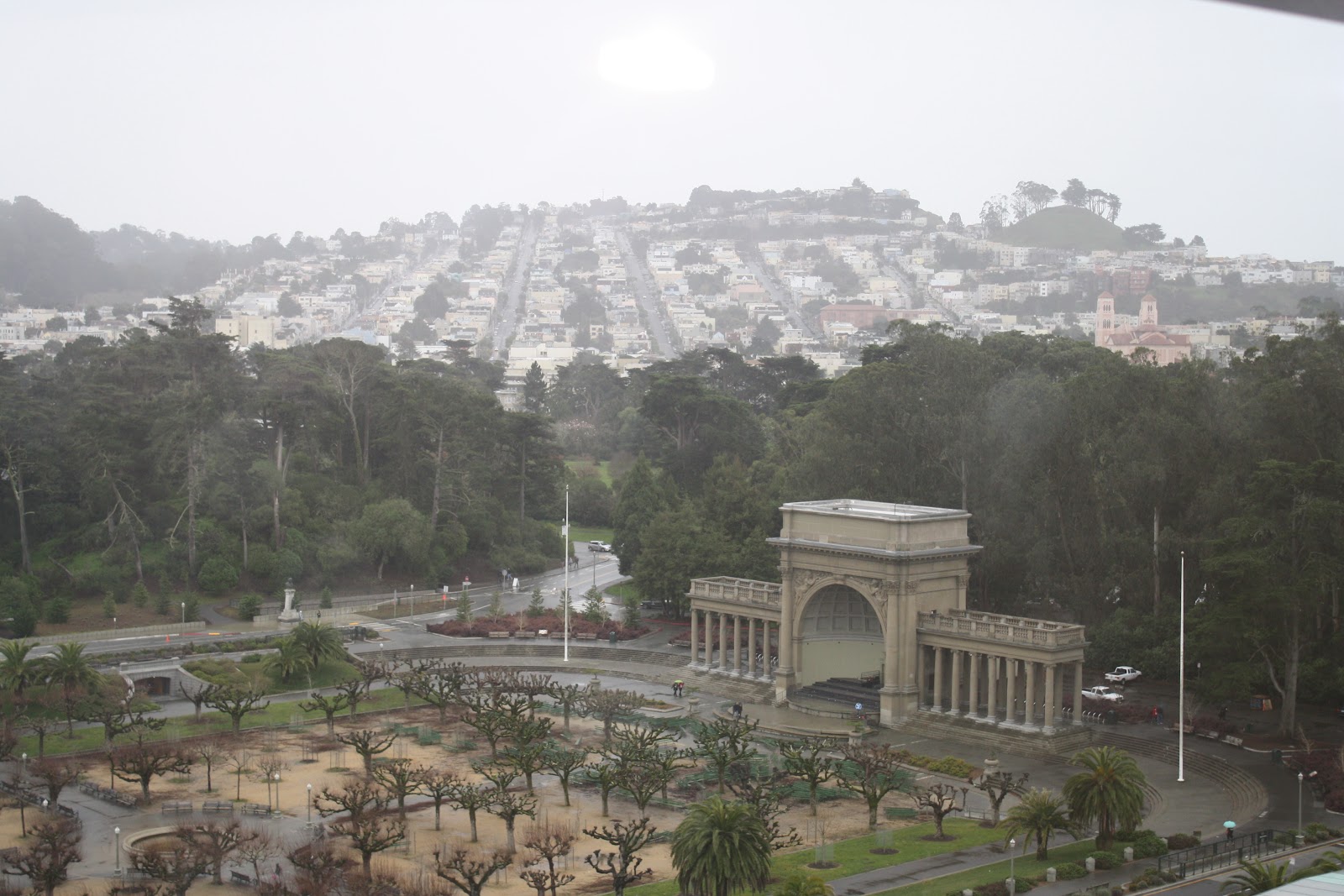
Taken from the new De Young Museum looking toward the Sunset District. Photo credit: Robert Guerrero

San Francisco is the city of my birth. My father and my step-mother both attended Mission High School in the Mission District. After moving to the City in 1940 from Oklaholma my paternal grandmother spent the rest of her life living on Tiffany Avenue in the Mission District. My mother lived in around the City as a child and again as a young newlywed when she and my father married. My maternal great-grandfather owned a barber shop on Market Street until the 1906 earthquake put him out of business. At age eighteen after living in France for a year, I settled in San Francisco. It was the first big city I lived in as an adult. I have a strong sense of history, and a connection to place with San Francisco that is important to me. While I didn't really grow up in the City, it's still one of the cities where I feel at 'home.'

Robert and I spent the three-day Martin Luther King, Jr. weekend visiting 'the City' -- as most locals call it. It was wondeful to be back. I have so many memories now from so many years of coming and going. My adult memories are of my time in the food and restaurant business dating back to the early 80s. Selling cheese at the food emporium the Oakville Grocery; the tyrannical French chef I worked under at Today's on Union Square; working with Jeremiah Tower at his Stars restaurant; socializing with all the 'foodies' of the time. Those were heady, food-filled days. Naturally, this trip also involved food and eating.

One of my favorite things to do in San Francisco is to visit the remodeled Ferry Building. When I was a child, the double-deck Embarcadero Freeway ran right in front of the building. It was the entrance to and exit off the Bay Bridge that started or ended further down the Embarcadero towards North Beach and Fisherman's Wharf. It was ugly and it marred the end of Market Street. The ferry building was nothing but ratty gray offices, a no man's land. After the 1989 Loma Prieta earthquake seriously damaged the freeway it was torn down, the Ferry Building was remodeled and it's now like a European food hall. Individual vendors such as Cow Girl Creamery, Acme Bread, and Hog Island Oyster Company line the cavernous halls. On Tuesdays, Thursdays and Saturdays there's an outdoor farmer's market. Every time I go there is something new to try. This time it was Boccalone -- Tasty Salted Pig Parts, a salumeria that has a wonderful variety of cooked and cured salumi and salami, hot and cold sandwiches, and their specialty -- Salumi Cones: sliced meat served like a sno-cone.


Boccalone - Tasty Salted Pig Parts in the Ferry Building.


A Salumi Cone from Boccalone.

We grabbed sandwiches at Boccalone and sat outside on the water with my friend Robert Ruiz and ate. After Robert took off we met up with Anna Petruolo and Lisa Robbins of A Dinner Together, foodie friends from Portland on their first visit to San Francisco. Anna is a personal chef in the Portland area and their company specializes in local and sustainable meals. We wandered around the building and through the farmer's market ooing and awing at all the amazing food. I always like to end my visit with a coffee from Frog Hollow Farm. Frog Hollow Farm is a 133-acre organic farm located in Brentwood, California on the Sacramento River Delta that produces twenty-five varieties of peaches, nectarines, cherries, apricots, pluots, plums, pears and grapes. Their little stand inside the Ferry Building sells strong coffee and great baked goods.


Local mushrooms at the Far West Fungi stall.


Brussels sprouts for sale at the framer's market.

Other highlights of the weekend were dinners at Nopalito and SPQR. Nopalito was recommended by David Lebovitz of the food blog: Living The Sweet Life In Paris. He raved about the carnitas and since it's one thing I can't get enough of I had to go. It certainly lived up to the hype. All of the food did. Our San Francisco friends Denise and Pete who had never been to the restaurant loved their meals. Nopalito specializes in traditional Mexican cookery while using 'local, organic and sustainable ingredients,' something I support fully. The carnitas were among the best I've ever eaten. The Quesadilla Roja con Chicharrón that we got for the table was yet another amazing pork belly dish, and the Ceviche Verde de Pescado y Calimari was so fresh and delicious I couldn't believe it was cold and rainy outside. Matthew Accarrino, the chef at SPQR was recently called a 'forager' and a 'wild man' by Serious Eats because he does exactly that: he forages and gathers wild edibles in the surrounding area like the Marin Headlands where he gathers watercress for a burratta with peperonata dish; wild chickweed for a baby-beet salad, and fennel pollen from wild fennel seed to be used in several dishes. We ate a pasta dish with nettles that was delicious: 'Stinging nettle torchio, garlic cream, pancetta and parmesan.' The rest of the meal included two starters: 'Spiced ricotta fritters & smoked maple syrup,' and a 'Pork belly 'croccante,' sundried tomatoes, olives & gremolata'; for our main courses Robert had the 'Petrale sole, cauliflower, capers, verjus butter & pinenuts' while I had the 'Lamb shoulder, chestnuts, mushrooms, parsnip & dandelion leaves.' The foraging chef came through for me. The flavors were earthy yet subtle and I liked knowing that some of the ingredients were locally foraged. On Monday before we left for the airport we ate cheeseburgers at the Slow Club in SoMa with our friend Andrew. Like so many restaurants in the Bay Area it's also all about being sustainable and local; this was printed on their menu: "We use produce & meat from farms & ranches that practice ecologically sound agriculture whenever possible." Ya gotta love the Bay Area and its serious foodies!

Since food and eating were the focus of this trip I had to check out the new cookbook store Omnivore Books in Noe Valley. I've been adding substantially to my cookbook collection over the past six months and I'm always curious to see what a store might have. This store is a small delight hiding out in a quaint San Francisco neighborhood. It has all types of books -- new, antiquarian, collectibles. The store is well-organized, has every type of book one could want, many of them signed by the authors. I stumbled across a signed copy of 'City Cuisine' by Susan Feniger and Mary Sue Millikin, a book of recipes for dishes they served at their restaurant 'City' in Los Angeles during the 80s. I grabbed it up and it's now part of my growing collection. When we weren't eating we visited the recently re-done De Young Museum as well as the Palace of the Legion of Honor where we saw the show: 'Cartier and America' about the French jeweler and his relationship to the States. While at the De Young we stopped into their cafe (I love museum cafes and restaurants) for a coffee with our friends Karen and Chris who very kindly got us free admission to the museum. The cafe is run by a company called McCall Catering and the chef, Lucas Schoemaker is an old foodie friend from my 80s food days. We didn't get to see him but I noticed that, of course, the food is seasonal and local! 'Seasonal and local San Francisco!' should be a new catchphrase. We had a great time in the City. We did a lot, saw some good friends, ate some wonderful food, and returned to Los Angeles sated and relaxed. We both enjoyed being in a 'real' city (sorry Los Angeles!) where we walked often and a lot. San Francisco has always been a food city to me. And this trip did not disprove that.


The Golden Gate Bridge taken from the Palace of Legion of Honor. Photo credit: Robert Guerrero

**A big thank you to Robert Ruiz for all the great foodie recommendations!

Please Vote For Me! The Foodista Best of Food Blogs Cookbook Contest: I have entered my baked papaya recipe, 'Chef Wally's Baked Papaya,' into the Foodista Best of Food Blogs Cookbook contest. If selected the recipe will be published in cookbook published by Andrews McMeel Publishing. To vote go to the top of my blog to the Foodista icon. Thanks!

My Status:
winter (lots of rain recently & we need it!) in Southern California -- cooler days, cold nights, comfort food. Off to Yosemite this weekend to attend the food event 'Chefs' Holidays 2010 at the Ahwanee': three days of cooking demos, lectures and eating with chefs Suzanne Goin, Duskie Estes and John Stewart at the Ahwanee Hotel. Can't wait! Also new cookbooks to try, some to review; new kitchen equipment to use. More cooking, eating, writing, and blogging.

Upcoming Posts: Interview with Chefs John Stewart & Duskie Estes
owners of Zazu & Bovolo restaurants in Sonoma County. Reviews: Venezia: Food & Dreams by Tessa Kiros, My Nepenthe: Bohemian Tales of Food, Family and Big Sur by Romney Steele, The Spirit Kitchen: Everyday Cooking with Organic Spices by Sara Engram and Katie Luber and Kimberly Toqe.

Bookmark and Share

Thursday, January 14, 2010

Review: 'Cooking Light'


Back in August I was asked by Time Inc. to take a look at, and review, the redesign of one of their magazines: 'Cooking Light.' It's a magazine I'd never heard of as I tend to read like most 'foodies' I know the more highbrow food magazines. Gourmet (RIP), Cook's Illustrated, Food & Wine, Bon Appétit, Sunset, Saveur and so on. My schedule since the fall has been so horrendous that I haven't had time to keep up with my life let alone my blog. I hope that's changed now. In any case, a couple of days ago I finally started looking through 'Cooking Light' and I liked what I saw. It's actually not only about food; it's a lifestyle magazine. The format is not like the glossies mentioned above. It's a very busy, full to-the-brim publication with a lot of worthwhile content. There can be a lot to look at on the page but that's okay. Here, content is king. This magazine is all about living a healthy lifestyle while keeping costs affordable. Here's a tag line that sums up the magazine's philosophy: 'healthy can and does taste great.'

First and foremost 'Cooking Light' aims to help the overextended working individual or family eat healthily and economically by highlighting meals that are quick and easy to make without forfeiting nutrition or flavor. The magazine contains such sections as 'Restaurant Navigator' which offers healthy strategies for dining out; 'Feed 4 For Less Than $10,' healthy easy-to-make meals for a family of four; 'A Carb Lover's Guide to Nutrition,' this section offers guidelines on what carbohydrates to eat and how to eat them. In addition to the many pages of recipes, the magazine is full of lifestyle tips: diet and exercise guidelines, information on health and beauty, travel and shopping, food and nutrition.

When I first saw the magazine I was afraid there would be recipes with 'frozen' and 'can' on the ingredient lists but the opposite is the case. For the most part the ingredients are fresh. Many of the recipes list low-sodium products, skinless chicken, premium products like pecorino Romano, fresh herbs and spices, and the occasional exotic ingredient like spicy Sriracha sauce. This speaks to efforts to make the dishes both healthy and tasty. Not always easy to do. Once I became used to the idea that this wasn't the more staid design of those 'other' magazines; that it was, well, uhm -- busier, I liked it. It's clean, easy-to-follow, modern, and colorful. It grabs the reader and pulls them in. It's the kind of magazine that says 'hey, look at me! I have important things you need to know! Things that will make your life easier, healthier, happier!' and it works. Right up front on page six is a recipe index. Need something fast? Don't have time to read the magazine? Or to spend time thumbing through it? Find a recipe in the index and turn right to it. Single page layouts have category identifying banners across the top corner of the page ('Healthy Living Cooking' or 'Dinner Tonight!') and big, bold titles that grab your attention; many also have step-by-step instructions with numbers and lists that are boxed or shaded making it to easy to follow along. I like these touches. They make the pages accessible.

While the magazine outwardly has little to do with the idea of one hundred miles and sustainability, it does promote eating and living a healthy lifestyle and that alone is a very good thing. To be honest I wasn't sure I'd like the magazine when I first received it but after spending a little time with it I do. It's comfortable like a favorite pair of slippers. The redesign, the recipes, the writing are all very approachable. This is a magazine to use on a daily basis not to take to bed for bedtime reading. Leave it on the kitchen counter as you'll need to use it tomorrow.

Please Vote For Me! The Foodista Best of Food Blogs Cookbook Contest: I have entered my baked papaya recipe, 'Chef Wally's Baked Papaya,' into the Foodista Best of Food Blogs Cookbook contest. If selected the recipe will be published in cookbook published by Andrews McMeel Publishing. To vote go to the top of my blog to the Foodista icon. Thanks!

My Status: winter in Southern California -- warm days, cold nights, comfort food. Off to Yosemite at the end of January to attend a 'Chefs' Holidays 2010 at the Ahwanee' event: three days of cooking demos, lectures and eating with chefs Suzanne Goin, Duskie Estes and John Stewart. Can't wait! Also new cookbooks to try, some to review; new kitchen equipment to use. More cooking, eating, writing, and blogging.

Upcoming Posts: Reviews: Venezia: Food & Dreams by Tessa Kiros, My Nepenthe: Bohemian Tales of Food, Family and Big Sur by Romney Steele, The Spirit Kitchen: Everyday Cooking with Organic Spices by Sara Engram and Katie Luber and Kimberly Toqe.

Bookmark and Share

Thursday, January 7, 2010

Review: 'Cooking The Cowboy Way'


Cooking The Cowboy Way: Recipes Inspired by Campfires, Chuck Wagons, and Ranch Kitchens. Grady Spears. Andrews McMeel Publishing. $29.99. (222p) ISBN-13: 978-0-7407-7392-1

Growing up on the central coast of California was paradisaical in many ways. The natural beauty. The rural feeling. My relatives close by. Farm fresh fruits and vegetables always at hand. Food and family often intermixed. My great-great-aunt Ona Chandler married into the Dana family -- a Spanish land grant family dating back to before California was a state when it still belonged to Mexico. Spanish land grants weren't actually Spanish, they were Mexican. Huge tracts of land that the Mexican government gave away to white men if they married the daughters of Mexican soldiers who were stationed in 'Alta California' -- the name it had at the time. The goal was to populate the region but it backfired when the white man took the land away from Mexico eventually making it the State of California. The Dana family operated a rancho near the small town of Nipomo -- a cow town, full of farmers and ranchers. Cattle was raised in the surrounding hills, and still is. And naturally where there's beef there's barbecue. Not just in Nipomo but also in the surrounding area: Santa Maria, Arroyo Grande, and San Luis Obispo. It's called Santa Maria-style barbecue and the cut used is tri-tip.

Santa Maria-style barbecue is a method of outdoor cooking that dates back to the early ranchos and land grants. It is still extremely popular and these days men spend weekends grilling away in grocery store parking lots on mobile barbecue pits; the smell of the oak wood fire, and grilling meat wafting in the air. Because of my Aunt Onie our family has a strong link to the area as well as to this style of cooking. As a child during the summer months the Nipomo's Men's Club held community barbecues on the weekends. A pit barbecue was brought to the Nipomo Community Center and the local men grilled tri-tip over oak and served it with homemade salsa, local pinquito beans, salad, and garlic bread. We sat outside at picnic tables covered with white paper and ate until we were full. And boy was it good eating. I have very fond memories of those days. Of those weathered cowboys both white and Latino who pitched in to cook that delicious food; and of the community coming together to feast.

When I received 'Cooking The Cowboy Way' for review, I immediately thought back to those summer barbecues. I was excited to see what recipes were included. Campfire, chuck wagon, and ranch cooking is a very distinctive way of cooking and one that I love. There's nothing quite like the experience, and the flavors, of cooking bacon and eggs, or a steak over an open campfire. The book is a wonderful compendium of this style of cooking. Chef, restaurant owner, and author Grady Spears explores this way of cooking by highlighting working ranches, and their food and recipes across North America. Each chapter is devoted to a different ranch in such states as Texas, Arizona, Missouri, Florida and Alberta, Canada. He includes cooking secrets, photos and stories about the cowboy way of life. While I was reading through it, it made me want to pack up my cast iron pan, and my camping gear, grab my horse, and hit the open road. I have everything but the horse. Maybe car camping is in the near future instead.

I cooked several recipes from the book and they were all a huge success. The recipes were well-written, easy to follow and pleased several friends that came over to eat them to the point that they asked for the recipes for themselves. The 'Porterhouse Steaks with Wildcatter Steak Rub' from the Wildcatter Ranch in Graham, Texas were heavenly -- the rub is a definite keeper. The salt pork and the jalapeño pepper gave the pinto beans in 'Tom's Ranch Beans' from the Perini Ranch in Buffalo Gap, Texas a full-flavored kick. A sprinkle of chili powder on the 'Golden Corn Bread Muffins' from Rancho de la Osa in Sasabe, Arizona provided a welcome boost; and the 'Autumn Pear Crisp' also from the Perini Ranch was the hit of the meal. The food and flavors in 'Cooking The Cowboy Way' are simple, big and satisfying. This is not haute cuisine nor should it be. This type of cooking came about because of a need to feed large numbers of hungry men; it had to be easy to prepare as well as filling. It also had to be cooked for the most part out of doors which adds another layer to the cooking and eating experience. To me food always tastes different, better, when cooked outside. The wood fire, the fresh air, the grilling meat are intoxicating. I was a little uncertain when I saw several recipes that listed things like garlic and onion powder, granulated beef base, canned goods, and commercial condiments but then I realized it's a different style of cooking, that it's not, as I mentioned, high cuisine, and that some of these ingredients make sense for these recipes. From what I experienced with the recipes I made they had no bearing whatsoever on the taste of the food. I definitely plan to cook more out of this book while checking my food snobbery at the kitchen door. 'Cooking The Cowboy Way' is a book worthy of everyone's cookbook shelves.

Happy trails!

Please Vote For Me! The Foodista Best of Food Blogs Cookbook Contest: I have entered my baked papaya recipe, 'Chef Wally's Baked Papaya,' into the Foodista Best of Food Blogs Cookbook contest. If selected the recipe will be published in cookbook published by Andrews McMeel Publishing. To vote go to the top of my blog to the Foodista icon. Thanks!

My Status: Winter in Southern California -- warm days, cold nights, comfort food. Off to Yosemite at the end of January to attend a 'Chefs' Holidays 2010 at the Ahwanee' event: three days of cooking demos, lectures and eating with chefs Suzanne Goin, Duskie Estes and John Stewart. Can't wait! Also new cookbooks to try, some to review; new kitchen equipment to use. More cooking, eating, writing, and blogging.

Upcoming Posts: Reviews: Cooking Light, a review of the redesign of the Time Inc. magazine; and of the new cookbooks Venezia: Food & Dreams by Tessa Kiros, My Nepenthe: Bohemian Tales of Food, Family and Big Sur by Romney Steele, The Spirit Kitchen: Everyday Cooking with Organic Spices by Sara Engram and Katie Luber and Kimberly Toqe.

Bookmark and Share

Friday, December 11, 2009

Guest Blog: My Mother, Dawn Goodman - My Food History


My great-grandparents, Ora and Rolla Goodman, at a family barbecue in Waller Park in Santa Maria, California.

Introduction - My Life in Food

I have very fond food memories from my childhood growing up on the Central Coast of California during the 60s and 70s. I grew up in the near-coastal town of San Luis Obispo. Even though I lived in other places as a child, it's my hometown. My mother, Dawn Goodman, was born in Santa Maria, a town further south on the 101 freeway; and her grandparents, Rolla and Ora Goodman lived in Orcutt, a small town just south of Santa Maria. Most of my memories are of my great-grandparents, their profuse garden and their sourcing of local-area ingredients for family meals. Their home was the locus of all family gatherings and many happy times were spent there. However, my mother, my sister, Traci, and I have our own food history of which I also have memories. My mother recounts much of it in this post: read on...

Recently I celebrated a 'big' birthday. My friend, Karen Roorda, devised the most extraordinary gift for me: my life in food. From childhood all the way up to this blog. She brought a large duffel bag to the party and proceeded to take out all manner of items related to my food, cooking and eating history including a Big Mac, large fries and chocolate shake from McDonald's. Was I surprised by this? Yes!! My mother had told her that we subsisted on fast food when my sister and I were in our pre-teens and teens. Karen had contacted my mother without my knowledge and gathered the necessary information to make this gift-presentation. It was an amazing surprise and a wonderful gift. Afterward I found out that my mother had written Karen an e-mail recounting my food history. I learned a lot from reading it, and remembered things I'd forgotten, and enjoyed it so much that I thought it would be fun to share on this blog. It also shows a bit where I came by my interest in food.

Before I let my mother take it away, I'd like to point out that she did raise my sister and I as a single mother without benefit of financial security. Food and cooking were not really a priority as she had a hard enough time keeping up with everything else. She did get us fed, she cooked often because she had to, we did eat out at fast food restaurants for awhile. I have no complaints. We all survived. I thank her for what she was able to do for us and show us about life. Now then, here's my mother, Dawn Goodman, writing to my friend Karen Roorda (I have inserted my comments in [brackets]):

Charles' History in Food by Dawn Goodman

Hi Karen:

What a wonderful thoughtful gift to give Charles. My problem is trying to remember 30 plus years ago, as well as having given Charles all his history (baby book, school records, photos, etc.) a long time ago, but I will do my best. Charles was nine pounds at birth and as a baby was not picky, he ate everything. At nine months he had to be put on low-fat milk because he was too roly-poly. He remained 'chunky' until junior high school when he shot up to six feet and thinned out. I do not remember him disliking any particular food although I'm sure there were some.

Being a single mother, working full-time, and keeping up the house and kids, I did not have much time for cooking. Also, Traci was a very picky eater, and as result we had a limited diet. I remember using a lot of Bisquick -- in pancakes with bananas, biscuits, coffee cakes, etc. But mostly it was the usual, over and over -- meatloaf, hamburgers, hot dogs, sausages (pigs in a blanket), macaroni and cheese (from a box), spaghetti, tuna casserole, fried chicken, pork and lamb chops, turkey, beef stew, potato and macaroni salad, Iceberg lettuce salad, coleslaw, and pizza. We ate a lot of zucchini, in bread, as a pureed soup base, patties and in salads. When pizza first came out it was in a box with a can of tomato sauce and dough. The toppings were up to each person. This was just before pizza parlors became popular. We ate out more often than not. There was McDonald's, Chinese food, Taco Bell, A&W drive ins, Sizzler (they were just starting). I seldom used a recipe only because I made the same things over and over. This was when nearly every recipe was made with one or the other of Campbell creamed soups; and yes, every dessert had some Jello in it. We ate few sweets except for cookies. I did make a banana bread/cake. Traci took the recipe to 1st grade for a Christmas book of recipes the kids made for their families. In it was our 'Rotten Banana Bread,' as the kids called it.

I was not a good cook and did not enjoy cooking. Because I didn't, I think it was in junior high when Charles took an interest in cooking. He made up a recipe and entered it in the once-a-year recipe contest in the local newspaper [Telegram Tribune, San Luis Obispo, California]. He didn't win but it was printed. It was called Pizza Casserole. There was Italian sausage, onion, zucchini, and tomato sauce with Bisquick biscuits on top. We ate it often. It was good. One time I was busy painting the outside of the house when he came out with a picnic lunch he had put together. He made me stop, clean up, and go for a short ride in the country. We had a lovely lunch which I've never forgotten. After he had been in France and come home he started culinary school. When a close friend was getting married he and two other students did the entire reception as a gift. He has always been interested in good food.

We were lucky to live near my grandparents and uncle and aunt. Because the ocean was only a few miles away we had access to fresh fish, clams, and abalone. This influenced Charles more than anything. When he was born there were still clams to be dug up at low tide in Pismo Beach [Clamming is now restricted due to over harvesting]. Grandma Ora made clam chowder and clam cakes. The abalone were on their way out by the time Charles was aware but we did have them from time to time. Grandpa Rollie raised sheep which we ate [I assume it was lamb we ate vs. mutton], and all the vegetables and fruit came out of their garden. Charles' favorite item was the homemade jerky our Uncle Herman made from deer that he hunted. We also had wonderful barbecues at the local park [see picture above], on homemade pits, and even in the fireplace when it was cold outside. It was a way of life fast disappearing. Favorite family recipes made by grandparents and aunts: Tamale Pie, enchiladas, Heavenly Hash - a fruit salad, Macaroni Loaf, Mock Ravioli, Hot Fudge Pudding (I think I've seen this in a box by Betty Crocker now?), Velvet Crumb Cake, plus others.

Dawn Goodman

Please Vote For Me: The Foodista Best of Food Blogs Cookbook Contest: I have entered my baked papaya recipe, 'Chef Wally's Baked Papaya,' into the Foodista Best of Food Blogs Cookbook contest. If selected the recipe will be published in cookbook published by Andrews McMeel Publishing. To vote go to the top of my blog to the Foodista icon. Thanks!

My Status:
Continued wet, cold weather here in Southern California which is nice for a change. Planning to make some hearty winter dishes, recipes. Also new cookbooks to try, some to review; new kitchen equipment to try out. More cooking, eating, writing, blogging coming soon.

Upcoming Posts: Reviews: Cooking Light, a review of the redesign of the Time Inc. magazine. Cooking The Cowboy Way, a review of the new cookbook by cowboy-chef Grady Spears.

Bookmark and Share

Sunday, December 6, 2009

Review: 'Bread Matters'

Bread Matters - The State of Modern Bread and a Definitive Guide to Baking Your Own. Andrew Whitley. Andrews McMeel Publishing. $34.99. (373p) ISBN 978-0-7407-7373-0

When I was a kid my sister and I baked all the time. That is we baked when weren't running all over Kingdom Come. We were latch key children being raised by a single mother. It was the 60s and 70s in small town California and it was safe to run all over K.C. with abandon, without worry. When we were old enough to care for ourselves my mother gave us house keys which we wore around our necks next to our skate keys on those metal ball chains like soldiers use to wear their dog tags. Running all over K.C. was pretty much a full-time activity but on those days when the weather was inclement, where we had to stay indoors, my mother often came home at five o'clock to two dozen chocolate chip cookies that we'd spent the wet afternoon baking. We simply followed the directions on the back of the Toll House chocolate chips package (still one of the best recipes for chocolate chip cookies ever!) and voila! Fresh-baked chocolate chip cookies. Even though my mother could barely keep up with it all she did manage to always have flour, white and brown sugar, baking soda and powder, oil, butter and Crisco on hand. If we were running low on a precious baking necessity Traci or I added it to the grocery list on the refrigerator. If we weren't making cookies it was cupcakes, or full on cakes from those Betty Crocker and Duncan Hines boxed mixes. We had no fear, we pretty much baked anything. Our solo forays did stop at yeast baking however but I do know that on more than one occasion we made bread with my mother. I have fond memories of slicing the still hot loaves and slathering butter all over them, and gobbling them down. Those were kitchen events where we all baked together as a family.

And then for some reason as an adult I did a whole lot less baking. I did bake massive amounts of sourdough bread at my first restaurant job as a cook which was both a challenge and a lot of fun. The place was called Sourdough Jack's and fresh-baked sourdough loaves were the first item put on a diner's table. But after that both personally and professionally I moved over to savory cooking; cooking the first courses, main courses, and sides. My culinary interests solidified. I didn't actually find the time for yeast baking and it sadly fell by the wayside. So when I received 'Bread Matters' to review from Andrews McMeel Publishing I was excited. I looked forward to reading it and to trying the recipes. 'Bread Matters' is not just a book about baking -- it's a book about a lifestyle. Author-baker Andrew Whitley has owned an award-winning bakery near Cumbria, England since 1976. He has devoted over twenty-five years to perfecting the craft of baking bread. In 2002 he founded Bread Matters, an organization devoted to improving the state of bread. He is also a founder of the Real Bread Campaign in Great Britain which started in 2003 and aims to encourage the increased and local consumption of 'real bread' in Great Britain.

The first three chapters of 'Bread Matters' are devoted to the issues surrounding the production of commercial bread. Whitley believes that store-bought bread has little nutritional value and unnecessary additives, and that it is made too quickly. He advocates that slowing down the process makes for better tasting, more nutritional bread. Chapter Three - Taking Control is a call to action: leave the store-bought, commercial stuff behind and buy or bake your own organic bread. The rest of the book tells you how with over fifty recipes. The book is for all levels of baker from beginner to expert. The first recipe I tried was from Chapter Six - First Bread and Rolls and is titled 'Basic Bread.' For not having made a yeast bread in a very long time it was just like getting back on the proverbial bicycle. It took several hours but they were relaxing hours; once I set the dough to rise on the back of my stove there was a giddy anticipation of will it rise properly, will it work? And it did, my basic bread loaf was a beautiful sight and tasted even better. Whitley's recipe and explanations were clear and straightforward. To have a complete experience I kneaded the dough with my hands vs. a mixer or Cuisinart and I am glad I did. It put me in closer touch with the process and it was fun!

What I like about the book is the detail to which Whitely goes to explain all the technical aspects of yeast cookery. Types of flour, water, yeast, baking equipment, essential ingredients, temperature, ovens, nutritional value, troubleshooting -- he even includes a section on gluten-free baking. While making my basic loaf I had a question about the process and quickly found the answer in another section of the book. I tried several other recipes including Baps (Small Rolls) and a recipe for calzoni; all worked beautifully. Next on my list of attempts will be something with sourdough and possibly croissants. The book is thorough, well-organized and full of great information on baking and yeast cookery. Whitley walks readers through the baking process with chapters like Starting From Scratch, Bread-A Meal in Itself, and Easy As Pie. If you don't already own one of the many yeast cookery books out there, or are looking for a good primer, I highly recommend Bread Matters. If you already have one or more of the others out there, this will make a perfect addition to your library. It's always good to have more than one source, isn't it? Andrew Whitley absolutely knows what he's talking about.

My Status: The cold weather is here in Southern California and I'm loving it. Time to pull put those winter dishes, recipes. Also new cookbooks to try, some to review; new kitchen equipment to try out. More cooking, eating, writing, blogging coming soon.

Upcoming Posts: my personal, childhood food history as told by my mother, Dawn Goodman. Reviews: Cooking Light, a review of the redesign of the Time Inc. magazine. Cooking The Cowboy Way, a review of the new cookbook by cowboy-chef Grady Spears.

Bookmark and Share