Showing posts with label cafe. Show all posts

Wednesday, March 31, 2010

Review: 'My Nepenthe'


My Nepenthe: Bohemian Tales of Food, Family and Big Sur. Romney Steele. Andrews McMeel Publishing. $35.00 (352p) ISBN: 978-0-7407-7914-5

My first visit to Nepenthe Restaurant in Big Sur, California was in the fall of 1983. It was a hot day and we sat outside on the massive terrace with a cold drink -- in those days white wine, or possibly beer -- and looked down at the unbelievable view. A view of the Monterey coast that went on forever. I've never forgotten that first visit. Or that first view. Yes, the parking lot was full of rental cars, and yes, there were crowds of tourists snapping photos but none of that mattered. I didn't know what to expect as we climbed the winding stone steps up through a canopy of oak trees to the restaurant. But once I stepped foot onto the large terrace and saw the view, I understood the magic of Nepenthe. No matter where you are at Nepenthe, the Phoneix Shop, the Café Kevah or the restaurant itself, the view is there. Always and forever. In my memory there were hawks floating on thermals almost at eye level. That is how high up Nepenthe is. In the clouds. At the end of our drinks it was very hard to pull myself away. Over the years I have gone back to Nepenthe each time I visited the area. How can one not visit such a spectacular place?

I was thrilled when I heard that a granddaughter of the original owners had written the Nepenthe story in celebration of its' 60th anniversary. I was even more excited when the book arrived on my doorstep for review. It is everything a book like this should be: a celebration of a place and time, a memoir from someone who lived it, and a cookbook with both family and restaurant recipes. I was recently in Big Sur, (see my last post) and I took Robert to Nepenthe for his first time. It was a joy to be back, and to see the magic at work on someone else. He was just as wowed as I was on my first visit. I love the Bohemian-hippy vibe that still exists in Big Sur and thankfully author, Romney Steele, infuses her writing with a lot of that historical detail. Nepenthe was and still is a gathering point for all sorts of interesting and unique souls. From writers, to artists and artisans, to film people, to through-voyagers. As a child Romney Steele was lucky enough to watch it all happen. From stories of her grandparents Bill and Lolly Fasset who bought the property from Orsen Welles and Rita Hayworth in 1947, to frequent visits by writers Henry Miller and Jack Kerouac, to filming of the Elizabeth Taylor-Richard Burton movie The Sandpiper, Ms. Steele was witness to it all. And a magical storyteller she is, as well as an accomplished cook.

The book is woven through with history, stories, memories, archival photos and recipes. Many of the non-archival color photos are beautifully shot by Sara Remington. The look and feel of the entire work is evocative of the free-living Bohemian lifestyle that permeates Big Sur's past and present. For me it was a fun read as I have been to Nepenthe, and to Big Sur many times over the years; it was wonderful to learn more about the history of both the restaurant and the area. Nepenthe is woven into the fabric of Big Sur and vice versa. They are a part of each other. I tried several recipes from the book and all worked very well, and were a pleasure to eat. On a recent Sunday I cooked this menu: 'Lolly's Roast Chicken with Sage Stuffing,' 'Cranberry Sauce,' 'Beet Salad with Sherry Vinaigrette' and 'Lemony Lemon Squares.' This time Robert and I were the only guests; we devoured everything, and loved it all. A few of the leftover lemon bars were passed along to family and friends -- all of whom have asked for the recipe, they were that good. What I like about the food in this book is that it fits in with the down-to-earth vibe the book embodies. Ms. Steele encourages use of local, sustainable ingredients. In fact she has a chart at the beginning of the book, 'Cooking notes,' that tells, (and suggests to), the cook the nature of each ingredient used when she developed and tested the recipes: 'Meats are prime,' 'Baking powder is aluminum-free,' 'Fruit is seasonal, organic if possible, and preferably locally grown,' and so on. This isn't fancy, five-star cuisine nor should it be. The food is earthy, hearty, filling and direct. It's food that makes sense for a restaurant and place perched high atop a hillside above the crashing surf in the wilds of Big Sur. Steele encourages the reader to find their own Nepenthe within the pages of her book. Steele is my kind of cook, this is my kind of book, I expect to pick it up often to both cook from, and to read more and again about life at Nepenthe. My Nepenthe.


Lolly's Roast Chicken with Sage Stuffing (Pg. 113)


Cranberry Sauce (Pg. 114)


Beet Salad with Sherry Vinaigrette (Pg. 279)


Lemony Lemon Squares (Pg. 250)

Upcoming Posts: Interview with Chefs John Stewart & Duskie Estes, owners of Zazu & Bovolo restaurants in Sonoma County. Cochon 555 Napa, a write up of the amazing pork festival that I went to in Napa. Reviews: The Spirit Kitchen: Everyday Cooking with Organic Spices by Sara Engram and Katie Luber and Kimberly Toqe.

Bookmark and Share

Monday, March 22, 2010

Big Sur, California


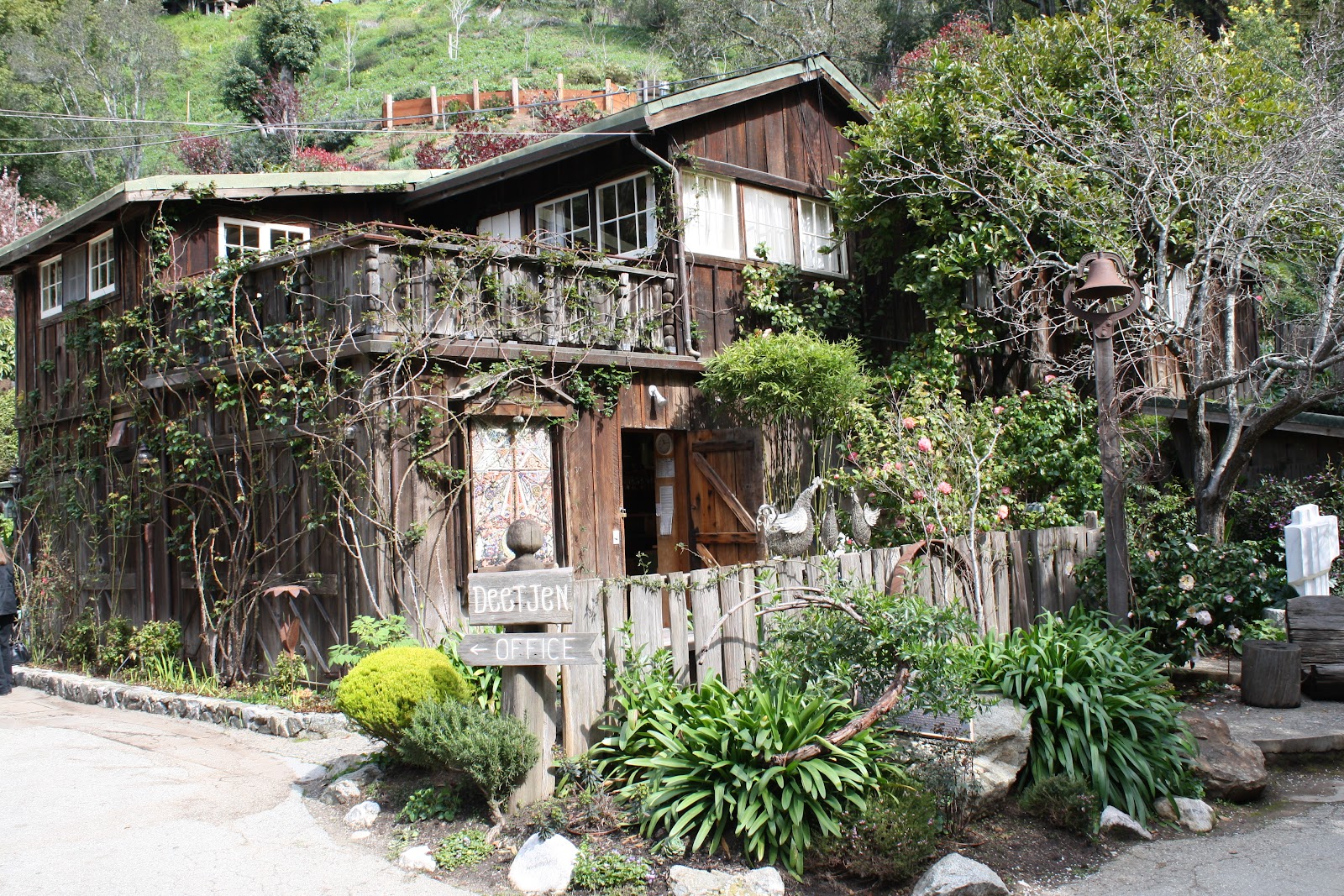
Despite having seen most of the state while growing up and living in it as an adult, California still surprises. Over and over it reveals itself to me, reminds me of its beauty, and still makes me think it is one of the most beautiful places on earth. It had been a number of years since I'd been to one of my favorite spots: Big Sur. Robert and I recently spent a long weekend there and I fell in love all over again. There is something magical in the Big Sur air. Everything about the place appeals to me. The remoteness, the residents still living like it is 1968, the overwhelming natural beauty. We approached the area by car from the north; as soon as we drove into the valley where Big Sur starts we entered a lovely time warp. There is little to none cell phone coverage (bliss!). We stayed at Deetjen's Inn where there is no television, no Internet (more bliss!), and no locks on the doors. It was just the break I'd needed and was looking for from all the noise of modern society. It's amazing how quiet it can actually be without all the technology we surround ourselves with. I'd been hearing about Deetjen's for a number of years from my friend Jill, an American living in London who goes whenever she's in California. I am so glad we chose to stay there.

Deetjen's Big Sur Inn, 48865 Highway One, Big Sur, California, 93920, (831) 667-2377, http://www.deetjens.com

Built in the early 1930s by Norwegian Helmut Deetjen, Deetjen's is world famous for its rustic charm and quiet isolation. The story goes that Helmut left his native Norway to get away from the 'authorities'; when he discovered the remote Big Sur coast he decided to stay. He and his wife Helen Haight bought several acres in Castro Canyon which offered the privacy and seclusion he sought. Starting with a redwood barn made from materials from the canneries along Monterey's Cannery Row, 'Grandpa Deetjen' went on to build more structures all constructed using local, scavenged redwood. The inn now comprises twenty rooms and is on the National Register of Historic Places. Over the years it has been visited by numerous famous names from old Hollywood, (Rita Hayworth, Orsen Welles, Kim Novak) to such writers and artists as Henry Miller, Jack Kerouac, Ansel Adams, and Edward Weston.


We stayed in 'Edy's Room'; only big enough for a bed, and a couple of chairs and small tables but so full of charm that the lack of space was quickly forgotten. The room was cozy against the chill temperatures outside, and once inside I found it hard to leave. The doors only locked from the inside which at first gave us pause but as long as we were careful to take valuables with us was not an issue. This lack of locks fits right into the laissez-faire Big Sur attitude. For an additional bit of intrigue the room is supposedly haunted by Edy's
ghost. Reading through the journals left behind by prior guests
we learned of possible ghostly sightings. If she was around during our stay she didn't let us know. While we were at Deetjen's we ate a dinner and a breakfast in the quaint dining room; the food was hearty and filling in keeping with the Deetjen's spirit. Now that I have been I look forward to going again soon.

Big Sur Bakery & Restaurant, Highway One, Big Sur, California, (831) 667-0520, http://www.bigsurbakery.com

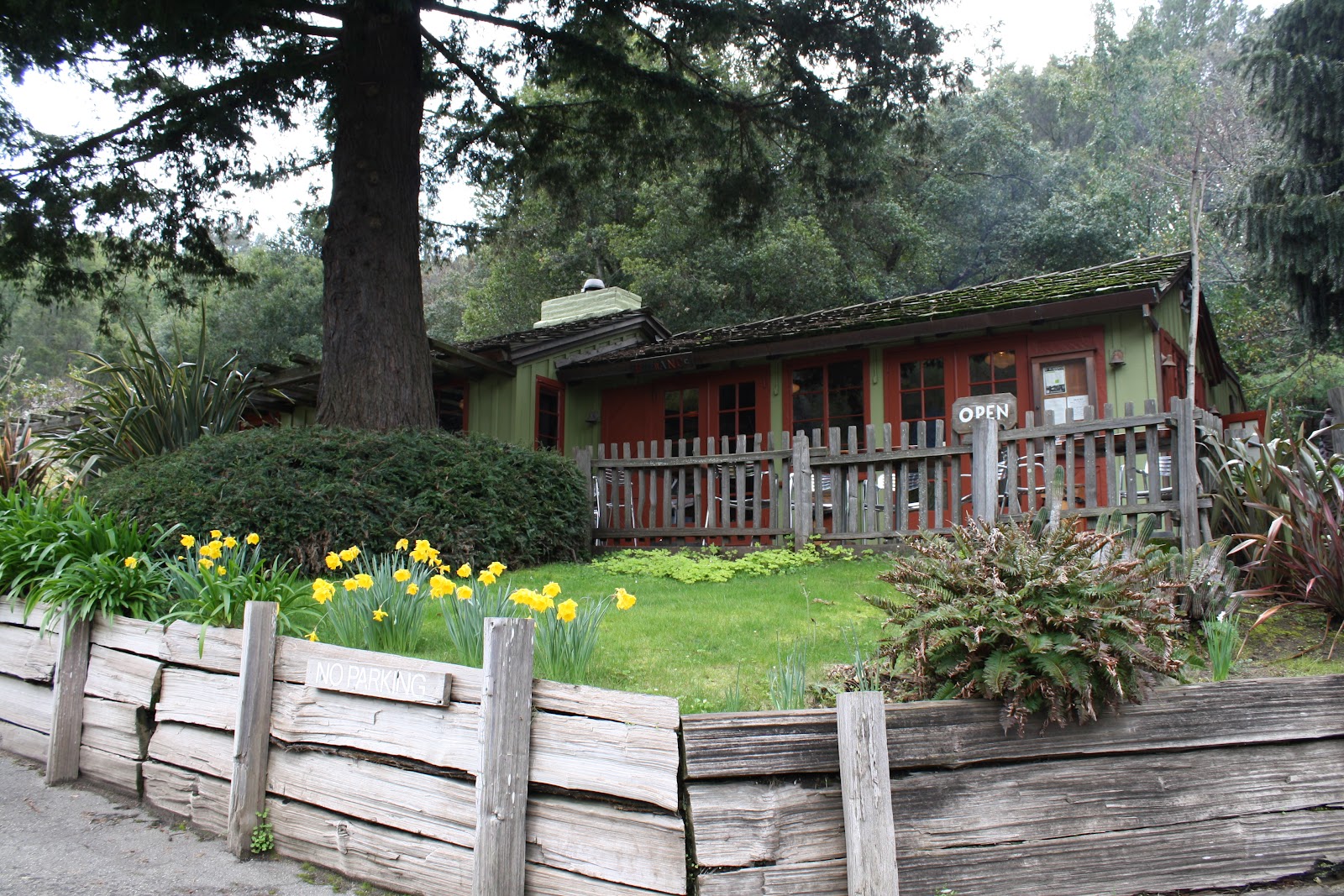
I used to go to Big Sur on a very regular basis when I worked in the restaurant business in San Francisco in the '80s. Jeremiah Tower, chef and owner of Stars restaurant, was once chef at Ventana Inn & Spa in Big Sur. Because of that connection, I always stayed at Ventana -- an upscale resort nestled against the Big Sur mountains just above the fog line. I usually ate in the Ventana restaurant. I also generally stayed put and enjoyed the beauty of Big Sur from on high. This time was different. Robert and I jumped in and really experienced it. We drove, we looked, we hiked and we explored almost every inch. One of the places I knew I'd be visiting was the newish Big Sur Bakery which I'd read about in the Los Angeles Times. I was quite intrigued by the story of three Los Angeles chef friends who chucked their urban-city lives to open a bakery and restaurant in the rustic wilds of Big Sur. It sounded so wonderful to me. Michelle Rizzolo, Philip Wojtowicz and Mike Gilson met while working in such Los Angeles restaurants as Campanile, La Brea Bakery, Joe's Restaurant, and Mélisse. At Big Sur Bakery Michelle handles all the baking and pastry making; Philip is responsible for the kitchen while Mike handles the front of the house. Using a wood-fired oven they bake bread every morning to be sold in the bakery and used in the restaurant. Many dishes on the restaurant menus are also cooked in the wood-fired oven; they honor the local, sustainable, organic credo as well. The trio has published a cookbook, 'The Big Sur Bakery Cookbook: A Year In The Life of a Restaurant,' about their first year in business in Big Sur. We had two meals both deeply satisfying. The wood-fire pizza ('Traditional wood fired tomato & cheese pizza') and salad ('Salad of seasonal organic mixed greens with shallots, herbs, roasted carrots, toasted sunflower seeds, and lemon poppy seed dressing') we shared after hiking to a waterfall was just what we needed to fuel up for our next adventure. The dinner we ate one night was the perfect antidote to the cold rainy weather outside. There is a dearth of good, reasonably priced eats in Big Sur so the cozy, rustic charm and hearty food of Big Sur Bakery is a most welcome addition. If I lived in Big Sur I'd be a regular patron.


Part of what I like about Big Sur is its hippy-bohemian vibe. We saw more hitchhikers in three days then I have seen in thirty years. The people we saw out and about, wandering down Highway One on foot, bicycle and car, in shops and restaurants, and at the beach often seemed to be aged hippies of yore, throwbacks to the '60s and the earlier Beat Generation, or for the younger generation -- modern day 'hippies.' The whole Big Sur vibe reminded me so much of growing up in the '60s and '70s along the Central Coast of California where these types were the norm. Hitchhikers thumbed rides freely; men had long hair and beards; everyone wore tie dye T-shirts, peace signs around their necks, and bell bottoms. It was an awesome time to be a kid; so much was happening. I felt a bit of this energy in Big Sur. A place where Beat author Jack Kerouac spent time; and where 'Tropic of Cancer' -- it's 1961 U.S. publication date led to an obscenity trial -- writer Henry Miller lived from 1944 to 1962. Naturally, one of my favorite places we visited was The Henry Miller Library.

The Henry Miller Library, Highway One, Big Sur California, (831) 667-2574, http://www.henrymiller.org

The library reminded me of City Lights Books in San Francisco's North Beach; a once fertile gathering place for Beatniks, subversives and hippies. Not just a library or a place to sell books but a meeting place; a place to find like-minded souls; a place to hear poetry or a lecture, to see a performance, or attend a workshop; a place to get back that counter-culture, hippy vibe lost long ago. The library does all of that while keeping the spirit of Miller alive. It's seemingly the nexus of all that Big Sur energy. Magnus the current 'librarian' holds court at the cashier's desk answering questions; passing on Miller tidbits, facts and history; and explaining upcoming activities at the library. Again, it felt as though I was stepping back in time. I loved the poster for 'Celebration At Big Sur' -- a counter-culture concert featuring some of my counter-culture heroes: Joan Baez, Joni Mitchell, Crosy, Stills Nash & Young -- hanging in the library. The poster (see below) says 'Celebrate with...' and I'm sorry I didn't get to.


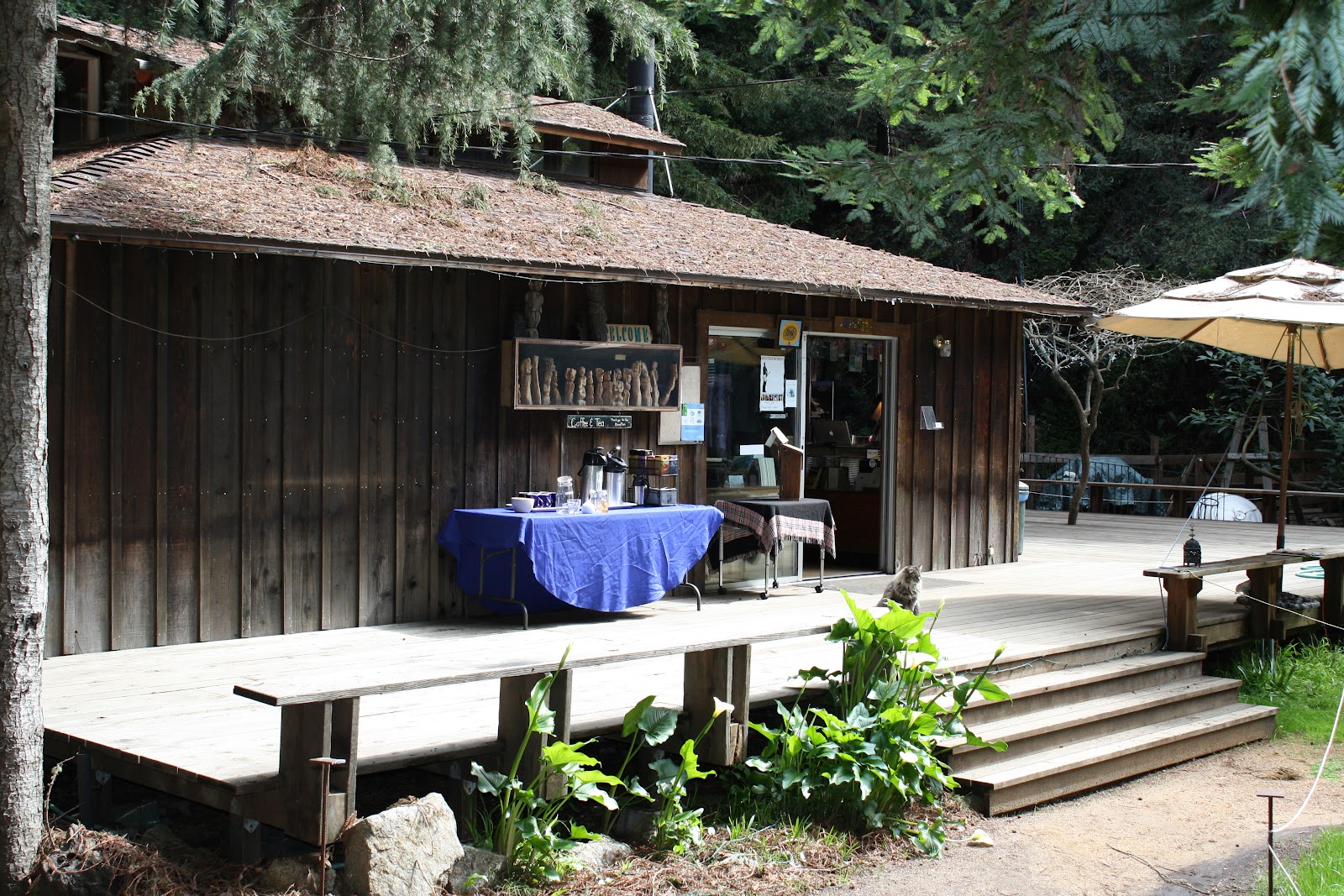
After we left the Henry Miller Library we ventured down the road to another famed Big Sur location, the can't-miss 'Nepenthe.' A restaurant and bar perched above the Pacific that offers breathtaking views down the Monterey coast. I'd been years ago on a hot summer day, and sat outside on the deck with a cold drink looking south down the coast. My memory of the view and the place has remained strong over the years. The weather was wet and cold the day Robert and I went but it was beautiful nonetheless.

Nepenthe Restuarant, 48510 Highway One, Big Sur, California, 93920, (831) 667-2345, http://www.nepenthebigsur.com

'Nepenthe' means 'isle of no care' in Greek. Original Nepenthe owners Lolly and Bill Fassett and their five children settled into a cabin on the property called the Log House in 1947. The Log House's most recent owners had been Rita Hayworth and Orson Welles neither of whom lived in the house due to their filing for divorce soon after they bought it. Once settled in the Fasset's proceeded to slowly build what is now Nepenthe. The original vision was for 'an open-air pavilion with good food and wine and dancing under the stars.' A place where people from up and down the coast would come and forget their cares.' [from the Nepenthe website]. Lolly opened the Phoenix Shop, now a gift shop, so local and traveling merchants could show and sell their wares. The family lived an idyllic Bohemian life surrounded by artists, crafts people, writers, performers and travelers. Like the Henry Miller Library, Nepenthe is still a gathering place for thinkers and creative types both those living locally and those traveling through; as well as for the endless stream of tourists traveling down Highway One who stop in for a drink, some food and the bewitching view. Nepenthe is like the cream on top of the Big Sur bohemian pie. One does have to wonder if Big Sur would be 'Big Sur' without Nepenthe. I have to say that it would not -- Nepenthe is such a part of the history and fabric of Big Sur that without it, it would be something else entirely. [While relatives of Lolly and Bill run the day-today of the restaurant], granddaughter, Romney Steele, has taken over the running of Nepenthe and has [recently] published a book about the history and food of the famed restaurant: 'My Nepenthe: Bohemian Tales of Food, Family and Big Sur.'


Easlen Institute, 55000 Highway One, Big Sur, California, 93920, (831) 667-3000, http://www.esalen.org

There is one other remarkable and fun thing that we did in Big Sur that I want to mention: visiting the hot springs at the Esalen Institute. Esalen, an organization and retreat center, "...was founded in 1962 as an alterntaive educational center devoted to the exploration of what Aldous Huxley called the 'the human potential,' the world of unrealized human capacities that lies beyond the imagination." [from the Esalen website] Now comprised of twenty-seven acres perched on the cliffs above the crashing Pacific ocean, the institute holds a wide range of classes, workshops, and retreats offering introductions to Gestalt, massage, sensory awareness and meditation. And then there's the natural hot springs that pour forth from a seaside cliff. Because the institute allows registered guests top priority in using the hot springs, they are only open to the public from 1:00 a.m. to 3:00 a.m. I'd heard about the springs before, and I knew admittance was in the middle of the night, but Robert and I still wanted to go. We took a nap and went. We are so glad we did. The springs are set atop a cliff right over the ocean. While soaking in the hot springs we watched the waves crashing on the rocks below us, we looked out into the dark sea, and at the stars twinkling above us. It was a magical two hours. Two hours that I hope to experience again. In fact the whole weekend was a magical experience I hope to experience again. One I also highly recommend.

Upcoming Posts: Interview with Chefs John Stewart & Duskie Estes, owners of Zazu & Bovolo restaurants in Sonoma County. Cochon 555 Napa, a write up of the amazing pork festival that I went to in Napa. Reviews: My Nepenthe: Bohemian Tales of Food, Family and Big Sur by Romney Steele, The Spirit Kitchen: Everyday Cooking with Organic Spices by Sara Engram and Katie Luber and Kimberly Toqe.

Bookmark and Share

Thursday, March 4, 2010

*The Local Report - McCall's Meat & Fish Co.


1.9 miles, about 5 minutes, from my home in Atwater Village.

There's a new butcher in town and boy am I happy. It seems that the neighborhood butcher has gone by the wayside and that more and more people are relying on supermarket butchers. While the guys at my local Whole Foods are very helpful and knowledgeable, there's nothing quite like the personal rapport one develops with a local, neighborhood butcher. Like the one I am establishing with chef-butchers, and husband and wife team, Nathan McCall and Karen Yoo. I have been in several times and appreciate the hands on service they have given me. Whether it be advice on what cut to buy, or how to cook it the duo is more than accommodating. McCall and Yoo both have backgrounds as professional chefs; McCall cooked at Los Angeles restaurants Café Pinot and Sona; he also spent time in the kitchen of Spain's Michelin three star restaurant Arzak followed up with time at Daniel Boulud's Restaurant Daniel in New York City. Yoo, trained as a pastry chef, worked in the kitchens of Campanile, Sona and Restaurant Daniel. Given their experiences in professional kitchens they should be the go-to-butchers for both the professional chef and the home cook. Who better to buy meat and fish from than those who have the experience cooking it? It's a great combination.

To add to the package they only source their meat, as they state on their website, 'from traditional farms where animals are naturally and humanely raised on the best feed without the use of hormones or chemical enhancements.' Their 'fish is wild-caught and/or responsibly raised in the most natural environment.' They stock CAB (Certified Angus Beef) Beef, Kurobuta (Berkshire to us) pork, lamb, locally raised poultry (from KenDor Farms in Van Nuys), eggs, house made sausages (pork-fennel and garlic-paprika), and sushi grade salmon and tuna among other seafood. Check the chalkboard specials for such items as duck, rabbit, squab and leg of lamb. They also sell a hand picked selection of gourmet oils, vinegars, salt and pepper, and other specialty cooking products. Given their propensity to be local and sustainable they could almost be a butcher my great-grandmother went to albeit without the sawdust on the floor and the banging screen door. And that is a comforting thought. I'll be going to McCall's often. It is so close to home. Welcome to the neighborhood Nathan and Karen!


Chef-butchers Karen Yoo and Nathan McCall


McCall's Meat & Fish Co.
2117 Hillhurst Ave.
Los Angeles, California 90027
323-667-0674 (ph.)
323-667-0802 (fax)
www.mccallsmeatandfish.com
www.twitter.com/mcallsmandf

*The Local Report(s): are occasional blog posts on restaurants, and/or businesses that either support the idea of one-hundred miles, and 'living life locally'; or are small, localized businesses in my neighborhood, and/or within one-hundered miles of my residence, that I prefer to support over the larger, national, corporate chains. For other The Local Report(s) please go the Archives section of this blog. Also, I'd love to hear from my readers about businesses that they support in their neighborhoods: write to me at charlesgthompson AT 100miles DOT com, or leave a comment here.

Upcoming Posts: Interview with Chefs John Stewart & Duskie Estes, owners of Zazu & Bovolo restaurants in Sonoma County. Cochon 555 Napa, a write up of the amazing pork festival that I went to in Napa. Reviews: My Nepenthe: Bohemian Tales of Food, Family and Big Sur by Romney Steele, The Spirit Kitchen: Everyday Cooking with Organic Spices by Sara Engram and Katie Luber and Kimberly Toqe.

Bookmark and Share

Tuesday, October 20, 2009

Review: The Berghoff Café Cookbook

The Berghoff Café Cookbook: Berghoff Family Recipes for Simple, Satisfying Food. Carlyn Berghoff with Nancy Ross Ryan. Andrews McMeel Publishing, $24.99 (156p) ISBN-13: 978-0-7407-8514-6

Family food history. A slice of Americana. Useful cooking tips. The Berghoff Café Cookbook has it all -- and more. Chef, owner, and author Carlyn Berghoff had me at 'Deviled Eggs with Three Fillings' (page 3). The three fillings: Caper Deviled Eggs, Smoked Salmon Deviled Eggs, and Horseradish Deviled Eggs. These are deviled eggs redux.

This cookbook is full of recipes for things we all know well; food we have eaten with our families as children and as adults. Dishes that bring comfort and are 'simple and satisfying' like the cover promises. Ms. Berghoff starts off telling the reader how her great-grandfather came over from Germany in the late 1800s eventually opening the Berghoff Café in Chicago in 1898; and how it ended up in her hands several decades later. As she wends her way through the family history she throws in interesting historical tid bits about food, eating and dining from the early days. Like the story of a 'shot and a wash,' a riff on a boilermaker. A stein of favorite Berghoff beer with a shot of their seven-year old Berghoff bourbon thrown in. It started in previous centuries when water was impure giving whiskey a bad taste. The solution? Drop a shot glass of whiskey into a mug of beer; when drinking it the drinker caught the shot glass with their teeth, the beer masking the taste of the whiskey. The drink is still on the menu albeit updated.

When I first picked up the book I was a little unsure; I guess I am more of a food snob than I want to admit. The design, and the food and recipes inside are more traditional, more down home than where my tastes usually run in cookbooks. I've recently seen too many flashy books by well-known chefs. However, after reading through it, and trying several recipes -- the Potato Soup being a favorite -- I changed my tune. This books embodies the Midwestern lifestyle. It evokes what a downtown, local Chicago restaurant can be. It is warm and homey. Ms. Carlyn's maxim of 'reuse, recycle and reinvent' that she applies in the restaurant works perfectly in the home kitchen.

The Berghoff Café Cookbook offers recipes across the food gamut from bar snacks to paninis and pizzas to yummy desserts. Dishes like Alsatian Onion Soup, Apple Pie Squares with Cheddar Crust, and Westpahlian Ham Panini with Granny Smith Apple and Applesauce are a few of the standouts. Ms. Carlyn has updated the restaurant menu since her great-grandfather's day while also keeping his spirit and food very much alive. She calls it 'tradition with a twist,' and I'd say that is quite apt.

I'd recommend this book to anyone looking for straightforward, comfort food pure and simple. It's all there. Nothing fancy; nothing pretentious. The next meal I want to prepare is from the Daily Specials section: Classic Salisbury Steak with Mushroom Jus Lié and Spaetzle. Salisbury steak is a dish my Nebraska born grandmother made often when I was growing up. Comfort food.

My Status: Settling into fall, happily. New cookbooks to try, some to review; new kitchen equipment to try out. More cooking, eating, writing, blogging coming soon.

Upcoming Posts: 'gleaning,' or the act of gathering public produce, or leftover farmer's market produce, and giving it to the poor, needy and hungry. A history of the movement, and those that are involved with it. Reviews: Cooking Light, a review of the redesign of the Time Inc. magazine.

Bookmark and Share

Tuesday, September 1, 2009

Sonoma County


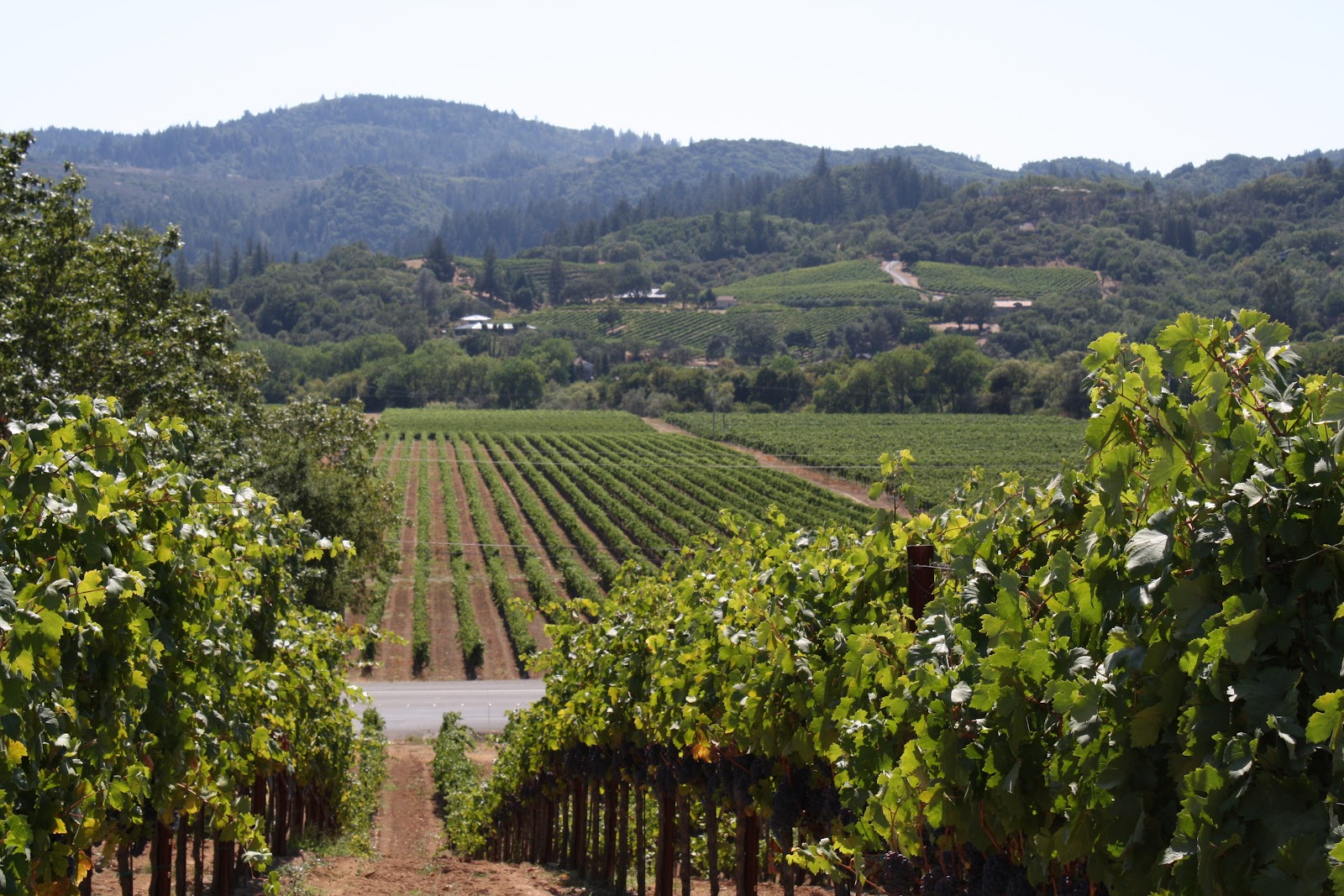
Sonoma County reminds me of France. I mean look at the above picture of Dry Creek Valley. It could easily have been taken in the south of France. The Languedoc maybe. Or Burgundy to the west even. It also has a lot of what makes France special. Great food, amazing wine, beautiful countryside. Sonoma County, the step-sister to the more well-liked, more popular Napa Valley, is my preference of the two. Slower, rougher, less populated but just as interesting in the areas of food and wine -- and it also has the stunning Sonoma Coast. So take that Napa Valley!

On a recent vacation to the area I was reminded how much folks in the Bay Area like to eat. I'd always known this; from living in San Francisco during the early 80s through the early 90s, and from working in the food and restaurant business. I sold cheese at Oakville Grocery -- the S.F. food emporium; I cooked at Jeremiah Tower's Santa Fe Bar & Grill in Berkeley; I helped Chef Tower open Stars restaurant in San Francisco; I met all the chefs and foodies in town; I ate at all the great restaurants in the area: Stars, Zuni Cafe, Chez Panisse, Square One, Masa's, Mustard's in Napa, on and on. It was a great time to eat in San Francisco. The food scene during that period was phenomenal. Once I'd left it and moved on, I missed it terribly.

Thankfully I was able to experience it again. Robert and I ate very well during our week's stay in Gureneville on the Russian River. I'd read about Zazu Restaurant & Farm, and Bovolo somewhere on the Internet and knew I wanted to try both. Both places are owned by married Chefs Duskie Estes and John Stewart; they also own the Black Pig Meat Co. where they make their own bacon and salumi from pigs that come from a sustainable hog operation, Pure Country Pork, in the Northwest. John is the salumist, studied with Mario Battali, and is responsible for the Black Pig meats, bacon and salumi that Zazu and Bovolo serve. Bovolo is a cafe inside a bookstore in Healdsburg, and Zazu is located on the edge of Santa Rosa and has a kitchen garden.

We ate at Zazu on a Wednesday night. The place was packed. The food was bliss. They describe themselves as a roadhouse restaurant serving playful Americana and Northern Italian inspired food. That is apt and I love the idea of an old-fashioned roadhouse. The place absolutely had that feel. Long and narrow; set just off the two-lane road; a dirt parking lot; and a counter with stools when you first walk in. We started with the Black Pig Salumi - 'Butcher's Plate'; four 'flavors' of salumi: backyard thyme, lomo, harissa, and felino served with pickled grapes. The salumi was rough and coarse and nicely fatty. The four preparations each distinctively different from the other without dwarfing the cured pork flavor of the meat. The pickled grapes? Really interesting -- little grape explosions in the mouth. We shared a "Caesar" -- romaine leaves with Vella dry jack and boccorones, or sardines. Robert had Seared Day Boat Scallops, Orzo Stuffed Squash Blossoms, Fennel Pollen, Backyard Tomatoes and Herbs. I had the Grilled Flat Iron Steak with Little Point Reyes Blue Cheese Ravioli, Ruby Chard. We ended with a house-made Chocolate Gelato with Scharfenberger Chocolate Sauce. I love cooking like this. Using local ingredients (as close as the kitchen garden); earthy and big in flavor and style. Somehow the food is exactly what should be served in the middle of wine country. European country cooking without being in Europe.


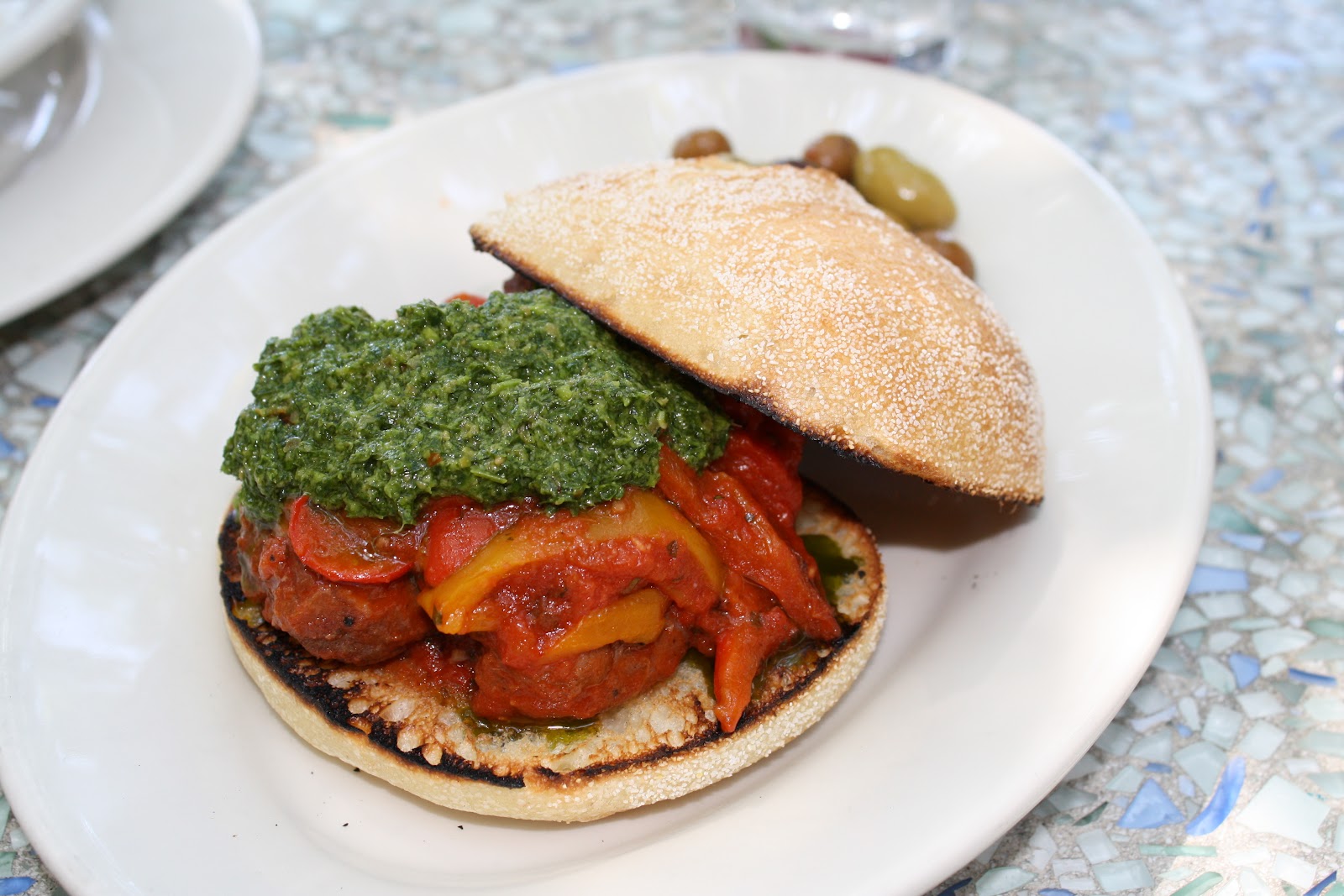
Bovolo was as good. The menu more simplified. The menu cover says 'Pizza, Gelato, Salumi.' They refer to the food as 'Slow Food... Fast.' Note the snail on their sign. I ate the World Famous Pork Cheek Sandwich with Roasted Peppers, Salsa Verde. The picture explains it better than I can. I'm still at a loss for words weeks later. The sandwich was served hot; the pork, the peppers and salsa verde all melded together into one crazily delicious taste sensation. These cooks know what they're doing. I also had the White Bean Salad -- spinach leaves, white beans, red onion in a green goddess-type dressing. Robert had the Farfalline Pasta Carbonara, Housemade Bacon, Farm Egg, Parmesan. It was the perfect wine country lunch. We'd spent an hour or so wandering around Healdsburg's town square and finished up sitting in Bovolo's garden eating this food. Napa Valley? Never heard of it.


The rest of the vacation wasn't quite as food-filled as described above. We had our moments of swimming and kayaking on the Russian River; bicycling around Gureneville, and just relaxing. But there is one other food related experience I do want to share. Guerneville, a very small resort town, happens to have a used bookstore. We were at the coffee place next door one day and wandered in. I asked the owner if he had any cookbooks and boy did he. Several shelves full and more coming. A local man who had a huge cookbook collection had died recently; the store owner bought the whole collection at the estate sale. I snatched these books up: 'Craig Claiborne's Kitchen Primer,' 'Beard on Pasta,' 'Food In Good Season' by Betty Fussell, 'James Beard's Treasury of Outdoor Cooking,' and probably my favorite 'La Cuisine de France - The Modern French Cookbook' by Mapie, the Countess de Toulouse-Lautrec! It's over 700 pages long. The copyright is 1964. She was only three years after Julia and 'Mastering The Art of French Cooking'. It's written in English; each recipe has the title in both English and French.

And I'm still not sure if there's any connection to the French painter Henri de Toulouse-Lautrec but there must be. I haven't had time to read through it yet. I'll report back. I couldn't leave without this book. The crowning moment in the used bookstore came when I noticed that the owner had a copy of 'Mastering The Art of French Cooking - Volume One' on a shelf behind the register. I asked about it. He said he hadn't had time yet to inventory, price and shelve it; he pulled it out and put it down on the counter in front of me. I opened it: there on the title page were three signatures, Julia Child, Simone Beck and Paul Child. The book was in pristine condition. He was asking $2,000 for it. I left without it. So that's it for my Sonoma County based food adventures for the moment. It's a magical place and I love it there. I can't wait to go again next year. Or sooner even.

In This Post: Zazu Restaurant & Farm, Bovolo, Black Pig Meat Co., Pure Country Pork

My Status
: trying to get back on track after a wonderful vacation. More cooking, eating, dining out, writing and blogging. Thinking ahead to cooler fall weather and praying that the fires in Los Angeles end soon, and that there are not more of them.

Upcoming Posts: 'gleaning,' or the act of gathering public produce, or leftover farmer's market produce, and giving it to the poor, needy and hungry. A history of the movement, and those that are involved with it. Reviews: 'The Berghoff Cafe Cookbook' and 'Cooking Light,' a review of the redesign of the Time Inc. magazine.
Bookmark and Share

Tuesday, July 28, 2009

The Local Report - Auntie Em's Kitchen


4.2 miles, about 12 minutes, from my home in Atwater Village.

I like my neighborhood. It feels like a neighborhood. In Los Angeles that's saying something. Neighborhoods here can comprise large geographical areas. Maybe they're actually more 'areas' than neighborhoods. I've lived in other areas of L.A.: the Fairfax district, Hollywood, West Hollywood. I moved to the eastside of Los Angeles in 1999; to Silver Lake. I quickly fell into the whole scene, the Silver Lake vibe. It reminded me of San Francisco, the East Village in New York: it wasn't L.A. Funky, more laid back, more creative, more mixed: socially, economically, racially. I'd found my L.A. home. It all worked for me. I now live in Atwater Village -- really just Silver Lake adjacent. Still quite happy in the neighborhood.

One of the reasons I like my 'hood so much is the preponderance of locally owned and operated businesses: cafes, restaurants, bars, stores and shops. Auntie Em's Kitchen is one such local business. Located in Eagle Rock, a neighborhood to the east of Atwater Village, it's a longtime fixture in the Eastside dining establishment. Owned by the indefatigable Chef Terri Wahl, the food is local, seasonal and prepared and served with a down home spirit that makes the dining experience fun and relaxing.

Robert and I had lunch there the other day. The place reminded me so much of the funky, vegetarian, hippy places I used to see all along Haight Street in San Francisco in the early 80s. Things at Auntie Em's are loose around the edges, very laid back. Want coffee? Go to the self-serve coffee island and help yourself. The room we were seated in had a reach-in refrigerator that the cooks came to for supplies. In the back was a refrigerator case full of cheeses for sale. Not only does Auntie Em's have a cafe and bakery but they also cater, sell housewares, condiments, sweets and cheese, and they recently began a farmer's market produce delivery service. I signed up for the produce delivery and I love it. Terri and her staff keep a keen eye out for whatever is fresh and seasonal. They shop at the local farmer's markets, and they work with local farmers and purveyors to keep up with what is seasonably available. The restaurant's menu changes according to what is fresh and available.

We both ordered salads; Robert had the Tossed Cobb -- chicken breast, applewood smoked bacon, avocado, blue cheese, egg, tomatoes, scallions and romaine lettuce tossed with a house dressing. I had the Grilled Steak -- thinly sliced marinated skirt steak, tomatoes, carmelized onions and blue cheese served on baby greens. The waitress told us that the first thing they were famous for was the cobb salad. The next thing was the red velvet cupcake -- a mini one of which came with the check gratis.

Auntie Em's Kitchen is a full-service fresh, organic, local and sustainable operation. My kind of place. I am glad it's part of my neighborhood.

My Status: enjoying all the summer produce; writing, cooking, blogging and eating!

Upcoming Posts: The Wedge Salad: a recipe, the origins of the salad and of Iceberg lettuce. Review: 'The Barcelona Cookbook'.

Bookmark and Share

Monday, July 6, 2009

Barcelona - Eats!


Tapas! Cervecerias! Tortillas! Patatas bravas! Pimientos del padrón! Montaditos! Jamón ibérico! Delicous eats of Barcelona. I feel I have slighted Spain and Barcelona in recent blog posts. They've all been about our incredible time in the Languedoc. Well, now it's time to give Barcelona a bit of face time. And to tell you about some of the amazing eats we had while there.

In a previous post I talked about how I'd never really made it down to Spain during my many trips to Europe; how I didn't really know it like I do France, Italy, and Great Britain. I have over the years heard raves about Barcelona and had always wanted to go. I'd say my expectations for the place were pretty high; we've all had those kinds of expectations, the ones so high that reality never quite measures up. I was afraid this might be the case but it was not. My expectations were exceeded. Barcelona is a magical place. Almost as if there's something in the air. There is something indescribable about it. It is in part: the geography - the sea on one side, mountains rising up on the other; the architecture and culture - Gaudi, the Sagrada Familia, the Modernist movement; the warm, easy going people - helpful, friendly, outgoing; the food - vibrant, bold and direct. But there is also that something that can't quite be put into words. So I think I'll stop trying. But let's do talk about the food!


I have to admit that I had always been a bit of a snob when it came to Spanish food. I'd eaten my share of tapas, and Spanish food here in the States; I'd also eaten it in Spain but it never really grabbed me the way French food did. The Spanish way of eating is so very different from the French; they eat later, often many small plates, or tapas, and often hopping from one place to the next. These concepts were opposite to my habits of sitting at table, whether at home or out, and eating several courses in a row. But I quickly embraced the Spanish way of eating on this trip. I understood it and enjoyed it for the first time.

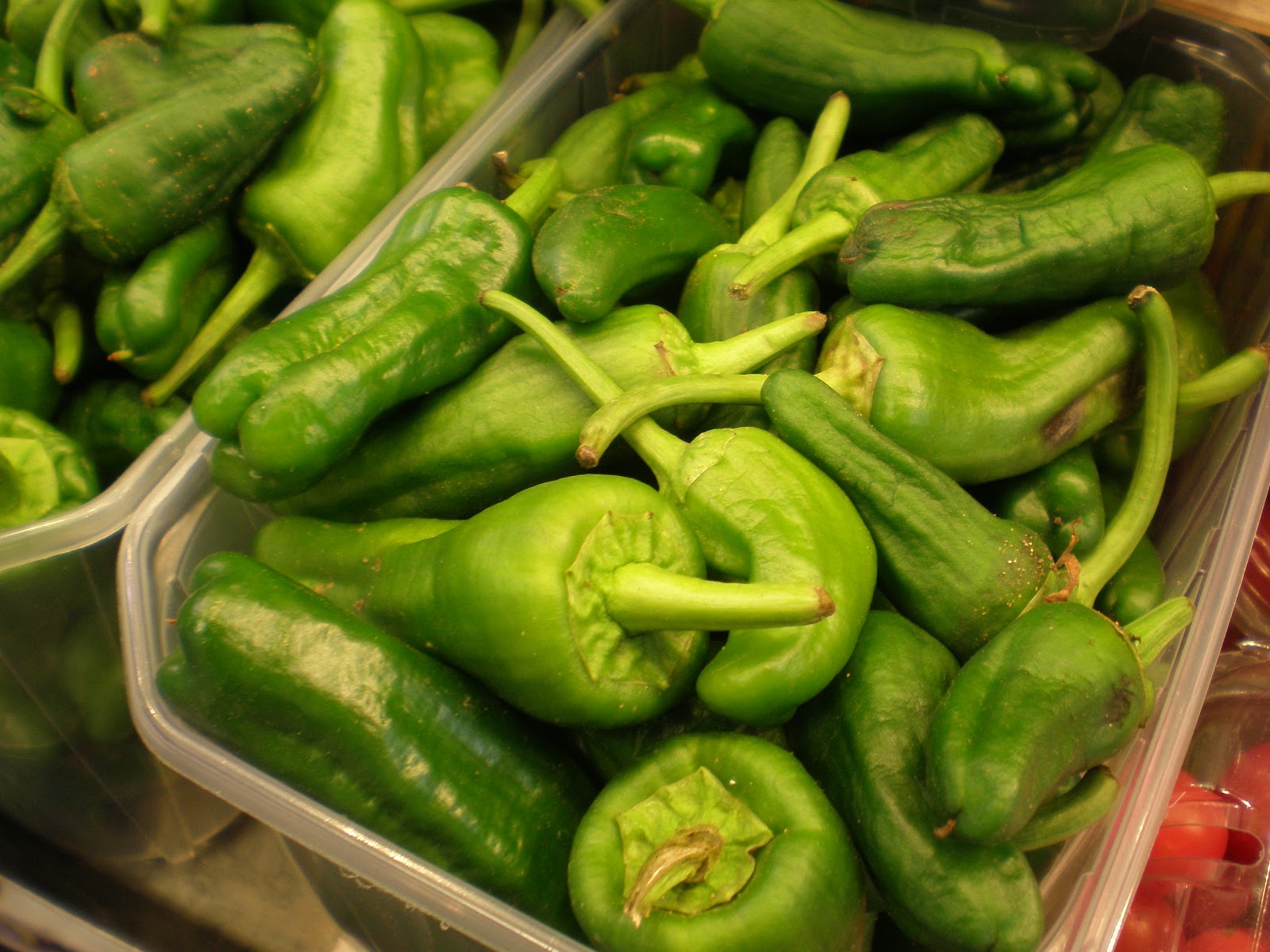
Eating in Barcelona was easy. There are cervecerias and cafes on every corner. When we went out to eat at 9:30 or 10:00 o'clock at night most places were full, crowds spilling out onto the streets. Once we were seated we ate course after course of tapas. I was a quick convert to this way of eating. Two of my favorite things were patatas bravas and pimientos del padrón. Patatas bravas are olive oil fried potatoes served with spicy red sauce and garlic mayonnaise; now who doesn't like garlic mayonnaise with a spicy kick to it eaten with fried potatoes? I was in love. Pimientos del padrón are green peppers fried in olive oil and sprinkled with ground rock salt. The padrón peppers are native to Galicia; they are small in size, about as big as a thumb, and only one in ten has any heat. The act of popping one in my mouth - a slight pepper kick, the crunch of the salt, the taste of olive oil - sent me deeper in love. What potatoes? All the peppers we ate were mild but apparently you can get one with some real heat and it can be quite a surprise. Like biting into a fried jalapeño pepper. A sort of pepper roulette the Spanish like to play. Then of course, there was the ham. Lots and lots of wonderful ham. And more delicous ham. Did I mention the ham?


One of our favorite meals was the lunch we ate in La Boqueria, Barcelona's daily open air market, just off the Ramblas. I'd read in our guide book about a place in the market called Bar Pinotxo. The bar and the owner, Jaunito, are legends in Barcelona. It was among the best food experiences we had. Robert deftly scored us two seats at the small, crowded bar. People stood behind us waiting for a chance to sit. Over a glass partition in front of us was the tiny kitchen where Jaunito and his staff of four worked miracles. There was no menu; there were items in containers behind the glass partition we could look at. There were also dishes being prepared that we checked out. The young man behind the counter couldn't have been nicer or more helpful. After we got our drinks we watched, we asked, he told us and suggested items. The food was fresh, clean and so tasty. We ate squid with white beans, grilled shrimp, oxtail in a red wine reduction sauce, garbanzo beans with Catalan sausage, and a codfish salad with peas. We watched as each dish was prepared three feet away. The flavors of Spanish food pop in one's mouth. They're loud but not in an obnoxoius way. One tastes each ingredient seperately then together. Fish, meat, olive oil, garlic, salt, spices. Textures; soft, crunchy, smooth, liquid. It's a circus of sensual experiences. Our lunch at Pinotxo supplied it all. When I go back to Barcelona I will absolutely be stopping into La Boqueria for another lunch at Bar Pinotxo.


Now there's a whole level of cooking going on in Spain that I have not written about. The molecular, El Bulli-influenced movement that has swept through the country, remains an institution there, and has come to the States as well. Unfortunately our time was brief, we were in Barcelona as tourists, being the first time for both of us, so we didn't experience fully this style of cooking. We did venture into one of Ferran Adrià's acolytes restaurants but the experience was so unpleasant that I'm not going to write about it. The restaurant and service were fine but unfortuanately neither of us enjoyed our meal. I really did want to have the Adrià-molecular experience too. So next time, now that we are no longer tourists, we'll be better equipped to jump into the molecular culinary fray. Who knows maybe we'll even dine at El Bulli!?

A final note: at breakfast we both adopted the popular tortilla, a type of potato fritatta. A slice of that with cafe con leche, and we were ready to start the day. Here's a recipe from Saveur Magazine.

¡Buen provecho!

Tortilla Española

From Saveur Magazine

Serves 4 - 8

Ingredients

  • 3/4 cup Spanish olive oil
  • 6 medium russet potatoes, peeled, quartered, and thinly sliced
  • 6 eggs
Heat oil over medium-high heat in a 10" sauté pan. Add potatoes and onions and cook, lifting and turning, until potatoes are soft but not brown, about 20 minutes.

Beat eggs in a large bowl until pale yellow. Transfer sautéed potatoes and onions with a slotted spoon to beaten eggs. Reserve oil.

Heat 1 tbsp. reserved oil in the same pan over medium heat. Add egg and potato mixture, spreading potatoes evenly in the pan. Cook uncovered until the bottom is lightly browned, about 3 minutes.

Gently shake pan so tortilla doesn't stick, then slide a spatula along edges and underneath tortilla. Place a large plate over pan and quickly turn plate over so tortilla falls onto plate. Add 1 tsp. reserved oil to pan, slide tortilla back in (uncooked side down), carefully tuck in sides with a fork, and continue cooking over medium heat until eggs are just set, about 3 minutes. Cut into wedges and serve at room temperature.

My Status: well, it's post 4th of July so summer is really here; enjoying all the summer produce, the great Southern California weather, writing, cooking, blogging and eating!

Upcoming Posts: The Wedge Salad: a recipe, the origins of the salad and of Iceberg lettuce. Review: 'The Barcelona Cookbook'.

Bookmark and Share

Friday, June 19, 2009

Paris


Paris is always about food.  At least it is for me.  It's probably other things to other people but food and eating are my end all, be all Paris activities.  And in a city like Paris food and the chance to eat are everywhere, all the time: cafes, restaurants, food shops, open air markets, crêpe stands, even department stores.  I actually wasn't going to write about Paris as I didn't think we had done enough food-related activities on our recent trip to France and Spain but then I realized we had.  Our short time there actually revolved around food and eating; happily so.

Our plane arrived at Charles de Gaulle airport on a Monday morning at 7:30 a.m.  By the time we took the RER to Gare du Nord and a taxi to our hotel in the Marais it was a little after 9:00 a.m.  We walked into the lobby, exhausted and unkempt from a long flight from Los Angeles that included a plane change in Boston, to find that our room wasn't ready, and might not be until 2:00 p.m.  We could leave our luggage and return later.  We had no choice.  We grabbed our cameras and our day bags, and stepped out into the street.  I told Robert I needed a good cup of coffee and something to eat.  On the corner down from the hotel were two cafes.  We sat down at an outside table on a little square in those most comfortable wicker-style French cafe chairs.  We ordered two petit déjueners with café crèmes.  I couldn't have been happier.  The fact that the first thing I was eating in France was a crusty baguette, sweet butter and jam was perfection.  There's nothing like a fresh morning baguette slathered with sweet French butter.  We sat, we ate, we drank our coffees and watched the Paris morning happen around us.  I could have sat there all day.


Except there were a few errands I wanted to run, one in particular: since I began writing my blog in January I have been exploring other blogs and bloggers.  One of my favorite blogs is David Lebovitz Living The Sweet Life In Paris.  He's an American pastry chef, was a longtime employee at Chez Panisse, who moved to Paris a few years back and writes about his Parisian experinces on his blog.  He'd announced that his most recent book: 'The Sweet Life In Paris' had been published and was for sale at W.H. Smith, an English-language bookstore in Paris.  With this subheading: 'Delicious Adventures in the World's Most Glorious - And Perplexing - City' I had to read it.  I thought it would be fun to read while in France.  W.H. Smith is located at 248, rue de Rivoli.  The rue de Rivoli is quite a long street that runs through several arrondissements but we could pick it up nearby so we set off after our petit déjeuner.  It ended up being a wonderful walk that took us right by several of Paris' grandest monuments such as the Hotel de Ville, Paris' city hall; the Louvre; the Tuileries Gardens; the Jeu de Paume museum; and the stunning Place de la Concorde.  It was like a walking tour of the best monuments in Paris; a perfect re-introduction to Paris.  I bought my book and proceeded to read and enjoy it throughout the trip.  On the walk back we peeked into the very chic Place Vendôme.  I was in love with Paris all over again.


Our first evening we met our friends Jay and Neill at their Marais apartment before going off to dinner.  I wanted to bring some kind of host gift.  As we walked back to the hotel we saw a number of pastry and candy shops selling beautifully colored macaroons.  Come to find out there is some kind of macaroon craze going on in Paris right now -- they are everywhere.  But they are very chic and fun-looking;different, strange flavors like green tea, peanut butter, passion fruit, and mango; Technicolor colors like bright pink, lime green, and lemon yellow.  Not at all what we are used to tasting and seeing in a macaroon.  We finally stopped in a little shop that sold macaroons only.  We selected a few and voila a host gift.  Jay and Neill own a wonderful little apartment just down the street from our hotel which they rent out when they are not in Paris.  We met them there, had drinks and hors d'ouevres, and then walked through the Marais to dinner at Aux Trois Petits Cochons.  The prix fixe menu changes daily depending on what's available at the open air market right next door; the food was well-prepared and quite good.  The restaurant and service charmimg.  It was an enjoyable evening.

The next day, I still had one remaining errand to run: to find a hostess gift for my friend, Anne, who we stayed with in the Languedoc.  So as we were out and about in Paris seeing a photography exhibit at the Bibliothèque Nationale in the morning, and visiting Père Lachaise cemetery in the afternoon, I kept my eyes open for something wonderful.  I also learned that Robert had never been to the Galeries Lafayette - Paris' top department store that looks like Bloomingdale's on acid.  I love the GL.  So in our quest for Anne's gift I took him there.  Once inside, we needed sustenance, I needed caffeine. Thankfully much in France is still old-fashioned.  We checked the directory and sure enough the entire top floor was a cafe and restaurant.  We made a beeline.  Unlike the horrible food courts that all U.S. malls have, this was the real deal. Like an old-fashioned cafeteria with real dishes and silverware.  Grab a tray, see what was on offer, and take what you want.  All the food looked good, was fresh and decently made.  We both had a cafe crème and a pastry.  We sat at a window seat and looked down on the Paris  Opera house.  The gold leaf on the statuary shining in the late-evening sunshine.  Happiness.  After, when Robert had seen more of the main store, we found Anne's gift across the street in the GL housewares store.  The GL also has an unbelievable food hall to rival any other food emporium of it's kind.  I'd never seen it before but the selection is immense and all of it extremely high quality.  It was fun to wander through looking at all the delicacies and drool.


Our final night in Paris was spent with my good friend Marie-Claude van Steenbrugghe.  I met Marie-Claude when she owned a goat cheese farm in the Charente, in west central France.  We met in San Francisco in the early 80s when I asked Marie-Claude if she would teach me how to make goat cheese.  I never actually got to learn but I did spend time with her at her farm in France, we toured goat cheese cooperatives, and met other goat cheese makers; she took me to a goat cheese competition and judging.  It was fascinating.  Several years later, at my behest, she brought her family to New York and ultimately helped develop the goat cheese that would become Coach Farm Goat Cheese made on a farm in Upstate New York.  We have remained good friends over the years.  Robert and I joined her, her husband and her daughter and her daughter's husband for dinner at her Paris apartment where we ate Japanese.  It was wonderful to see her again and get caught up with each other.  It was another very special food-filled evening in Paris.

Our two days in Paris were fast and furious but worth every rushed moment.  We did and saw a lot, I got my periodic refill of the  City of Light.  A city I treasure and always will.  I hope we are able to go back soon.

Photos above, taken by Charles Thompson and Robert Guerrero, from top to bottom: the newly gold-leafed sculpture, 'Liberty' on top of the Paris opera house; city-owned bicycles for rent; Charles and Robert at their favorite neighborhood cafe; Robert eating his Galeries Lafayette pastry and coffee in the store cafeteria.

Check Out: my friend Jo's new site: Chef's Who Tweet, follow your favorite chef; add to her list of chefs who Twitter.

My Status: home, blogging, cooking, missing Paris, eating, blogging, missing France, dreaming of Barcelona...

Upcoming Posts: France and Spain: more detailed blogs about our food and travel adventures in France and Spain.  The Wedge Salad: a recipe, the origins of the salad and of Iceberg lettuce.  Review:  'The Barcelona Cookbook'.

Bookmark and Share