Showing posts with label wine. Show all posts

Wednesday, March 31, 2010

Review: 'My Nepenthe'


My Nepenthe: Bohemian Tales of Food, Family and Big Sur. Romney Steele. Andrews McMeel Publishing. $35.00 (352p) ISBN: 978-0-7407-7914-5

My first visit to Nepenthe Restaurant in Big Sur, California was in the fall of 1983. It was a hot day and we sat outside on the massive terrace with a cold drink -- in those days white wine, or possibly beer -- and looked down at the unbelievable view. A view of the Monterey coast that went on forever. I've never forgotten that first visit. Or that first view. Yes, the parking lot was full of rental cars, and yes, there were crowds of tourists snapping photos but none of that mattered. I didn't know what to expect as we climbed the winding stone steps up through a canopy of oak trees to the restaurant. But once I stepped foot onto the large terrace and saw the view, I understood the magic of Nepenthe. No matter where you are at Nepenthe, the Phoneix Shop, the Café Kevah or the restaurant itself, the view is there. Always and forever. In my memory there were hawks floating on thermals almost at eye level. That is how high up Nepenthe is. In the clouds. At the end of our drinks it was very hard to pull myself away. Over the years I have gone back to Nepenthe each time I visited the area. How can one not visit such a spectacular place?

I was thrilled when I heard that a granddaughter of the original owners had written the Nepenthe story in celebration of its' 60th anniversary. I was even more excited when the book arrived on my doorstep for review. It is everything a book like this should be: a celebration of a place and time, a memoir from someone who lived it, and a cookbook with both family and restaurant recipes. I was recently in Big Sur, (see my last post) and I took Robert to Nepenthe for his first time. It was a joy to be back, and to see the magic at work on someone else. He was just as wowed as I was on my first visit. I love the Bohemian-hippy vibe that still exists in Big Sur and thankfully author, Romney Steele, infuses her writing with a lot of that historical detail. Nepenthe was and still is a gathering point for all sorts of interesting and unique souls. From writers, to artists and artisans, to film people, to through-voyagers. As a child Romney Steele was lucky enough to watch it all happen. From stories of her grandparents Bill and Lolly Fasset who bought the property from Orsen Welles and Rita Hayworth in 1947, to frequent visits by writers Henry Miller and Jack Kerouac, to filming of the Elizabeth Taylor-Richard Burton movie The Sandpiper, Ms. Steele was witness to it all. And a magical storyteller she is, as well as an accomplished cook.

The book is woven through with history, stories, memories, archival photos and recipes. Many of the non-archival color photos are beautifully shot by Sara Remington. The look and feel of the entire work is evocative of the free-living Bohemian lifestyle that permeates Big Sur's past and present. For me it was a fun read as I have been to Nepenthe, and to Big Sur many times over the years; it was wonderful to learn more about the history of both the restaurant and the area. Nepenthe is woven into the fabric of Big Sur and vice versa. They are a part of each other. I tried several recipes from the book and all worked very well, and were a pleasure to eat. On a recent Sunday I cooked this menu: 'Lolly's Roast Chicken with Sage Stuffing,' 'Cranberry Sauce,' 'Beet Salad with Sherry Vinaigrette' and 'Lemony Lemon Squares.' This time Robert and I were the only guests; we devoured everything, and loved it all. A few of the leftover lemon bars were passed along to family and friends -- all of whom have asked for the recipe, they were that good. What I like about the food in this book is that it fits in with the down-to-earth vibe the book embodies. Ms. Steele encourages use of local, sustainable ingredients. In fact she has a chart at the beginning of the book, 'Cooking notes,' that tells, (and suggests to), the cook the nature of each ingredient used when she developed and tested the recipes: 'Meats are prime,' 'Baking powder is aluminum-free,' 'Fruit is seasonal, organic if possible, and preferably locally grown,' and so on. This isn't fancy, five-star cuisine nor should it be. The food is earthy, hearty, filling and direct. It's food that makes sense for a restaurant and place perched high atop a hillside above the crashing surf in the wilds of Big Sur. Steele encourages the reader to find their own Nepenthe within the pages of her book. Steele is my kind of cook, this is my kind of book, I expect to pick it up often to both cook from, and to read more and again about life at Nepenthe. My Nepenthe.


Lolly's Roast Chicken with Sage Stuffing (Pg. 113)


Cranberry Sauce (Pg. 114)


Beet Salad with Sherry Vinaigrette (Pg. 279)


Lemony Lemon Squares (Pg. 250)

Upcoming Posts: Interview with Chefs John Stewart & Duskie Estes, owners of Zazu & Bovolo restaurants in Sonoma County. Cochon 555 Napa, a write up of the amazing pork festival that I went to in Napa. Reviews: The Spirit Kitchen: Everyday Cooking with Organic Spices by Sara Engram and Katie Luber and Kimberly Toqe.

Bookmark and Share

Tuesday, September 1, 2009

Sonoma County


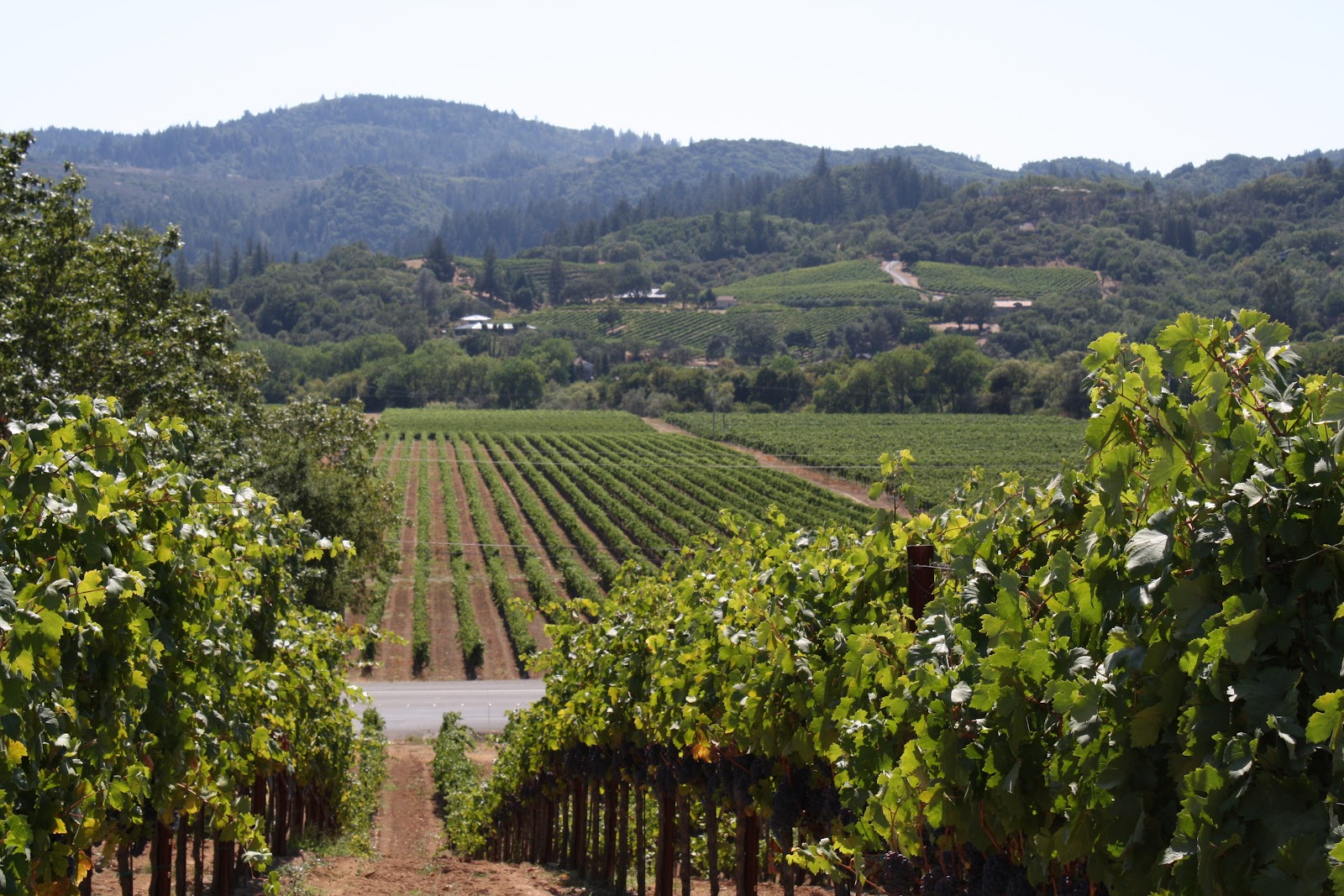
Sonoma County reminds me of France. I mean look at the above picture of Dry Creek Valley. It could easily have been taken in the south of France. The Languedoc maybe. Or Burgundy to the west even. It also has a lot of what makes France special. Great food, amazing wine, beautiful countryside. Sonoma County, the step-sister to the more well-liked, more popular Napa Valley, is my preference of the two. Slower, rougher, less populated but just as interesting in the areas of food and wine -- and it also has the stunning Sonoma Coast. So take that Napa Valley!

On a recent vacation to the area I was reminded how much folks in the Bay Area like to eat. I'd always known this; from living in San Francisco during the early 80s through the early 90s, and from working in the food and restaurant business. I sold cheese at Oakville Grocery -- the S.F. food emporium; I cooked at Jeremiah Tower's Santa Fe Bar & Grill in Berkeley; I helped Chef Tower open Stars restaurant in San Francisco; I met all the chefs and foodies in town; I ate at all the great restaurants in the area: Stars, Zuni Cafe, Chez Panisse, Square One, Masa's, Mustard's in Napa, on and on. It was a great time to eat in San Francisco. The food scene during that period was phenomenal. Once I'd left it and moved on, I missed it terribly.

Thankfully I was able to experience it again. Robert and I ate very well during our week's stay in Gureneville on the Russian River. I'd read about Zazu Restaurant & Farm, and Bovolo somewhere on the Internet and knew I wanted to try both. Both places are owned by married Chefs Duskie Estes and John Stewart; they also own the Black Pig Meat Co. where they make their own bacon and salumi from pigs that come from a sustainable hog operation, Pure Country Pork, in the Northwest. John is the salumist, studied with Mario Battali, and is responsible for the Black Pig meats, bacon and salumi that Zazu and Bovolo serve. Bovolo is a cafe inside a bookstore in Healdsburg, and Zazu is located on the edge of Santa Rosa and has a kitchen garden.

We ate at Zazu on a Wednesday night. The place was packed. The food was bliss. They describe themselves as a roadhouse restaurant serving playful Americana and Northern Italian inspired food. That is apt and I love the idea of an old-fashioned roadhouse. The place absolutely had that feel. Long and narrow; set just off the two-lane road; a dirt parking lot; and a counter with stools when you first walk in. We started with the Black Pig Salumi - 'Butcher's Plate'; four 'flavors' of salumi: backyard thyme, lomo, harissa, and felino served with pickled grapes. The salumi was rough and coarse and nicely fatty. The four preparations each distinctively different from the other without dwarfing the cured pork flavor of the meat. The pickled grapes? Really interesting -- little grape explosions in the mouth. We shared a "Caesar" -- romaine leaves with Vella dry jack and boccorones, or sardines. Robert had Seared Day Boat Scallops, Orzo Stuffed Squash Blossoms, Fennel Pollen, Backyard Tomatoes and Herbs. I had the Grilled Flat Iron Steak with Little Point Reyes Blue Cheese Ravioli, Ruby Chard. We ended with a house-made Chocolate Gelato with Scharfenberger Chocolate Sauce. I love cooking like this. Using local ingredients (as close as the kitchen garden); earthy and big in flavor and style. Somehow the food is exactly what should be served in the middle of wine country. European country cooking without being in Europe.


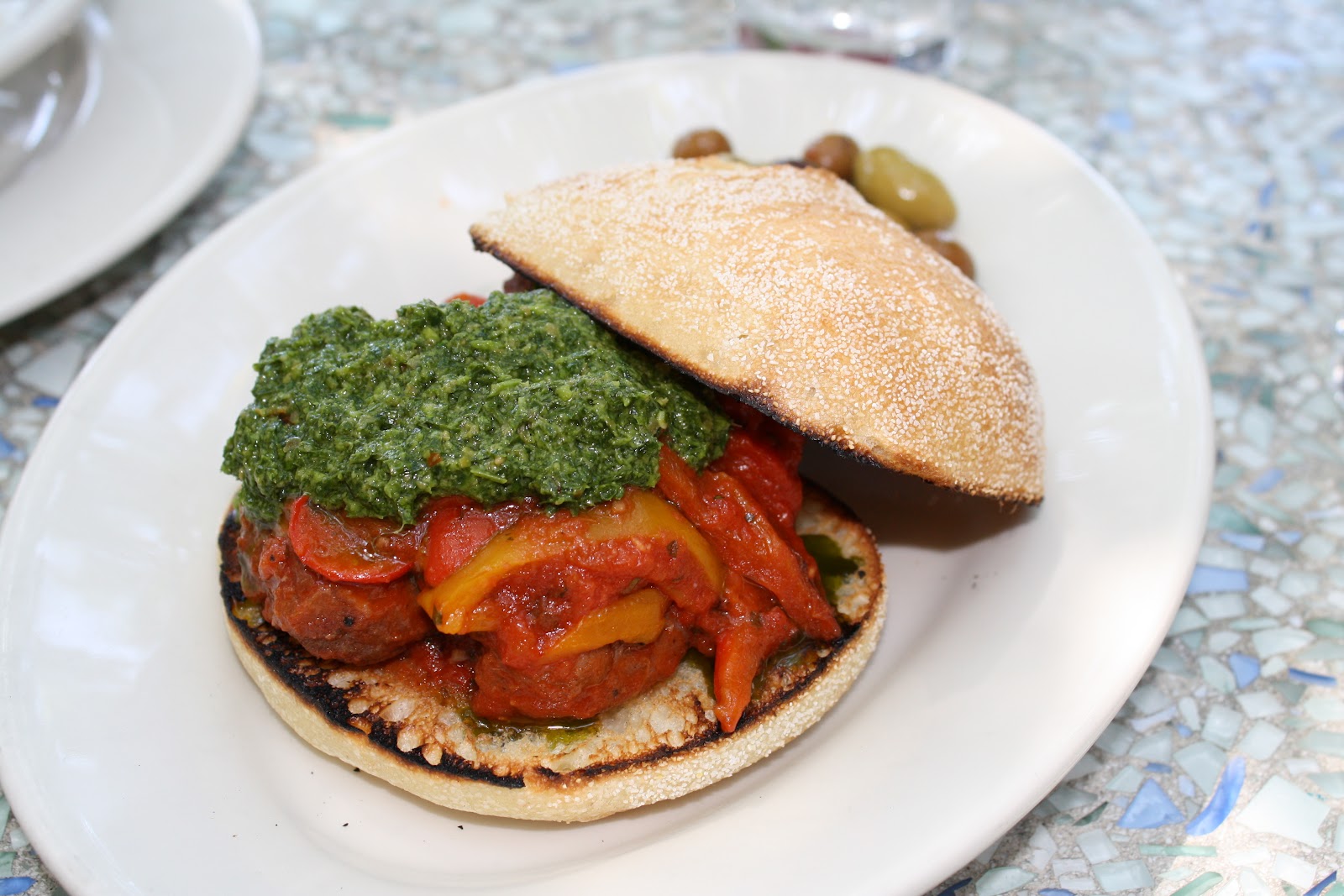
Bovolo was as good. The menu more simplified. The menu cover says 'Pizza, Gelato, Salumi.' They refer to the food as 'Slow Food... Fast.' Note the snail on their sign. I ate the World Famous Pork Cheek Sandwich with Roasted Peppers, Salsa Verde. The picture explains it better than I can. I'm still at a loss for words weeks later. The sandwich was served hot; the pork, the peppers and salsa verde all melded together into one crazily delicious taste sensation. These cooks know what they're doing. I also had the White Bean Salad -- spinach leaves, white beans, red onion in a green goddess-type dressing. Robert had the Farfalline Pasta Carbonara, Housemade Bacon, Farm Egg, Parmesan. It was the perfect wine country lunch. We'd spent an hour or so wandering around Healdsburg's town square and finished up sitting in Bovolo's garden eating this food. Napa Valley? Never heard of it.


The rest of the vacation wasn't quite as food-filled as described above. We had our moments of swimming and kayaking on the Russian River; bicycling around Gureneville, and just relaxing. But there is one other food related experience I do want to share. Guerneville, a very small resort town, happens to have a used bookstore. We were at the coffee place next door one day and wandered in. I asked the owner if he had any cookbooks and boy did he. Several shelves full and more coming. A local man who had a huge cookbook collection had died recently; the store owner bought the whole collection at the estate sale. I snatched these books up: 'Craig Claiborne's Kitchen Primer,' 'Beard on Pasta,' 'Food In Good Season' by Betty Fussell, 'James Beard's Treasury of Outdoor Cooking,' and probably my favorite 'La Cuisine de France - The Modern French Cookbook' by Mapie, the Countess de Toulouse-Lautrec! It's over 700 pages long. The copyright is 1964. She was only three years after Julia and 'Mastering The Art of French Cooking'. It's written in English; each recipe has the title in both English and French.

And I'm still not sure if there's any connection to the French painter Henri de Toulouse-Lautrec but there must be. I haven't had time to read through it yet. I'll report back. I couldn't leave without this book. The crowning moment in the used bookstore came when I noticed that the owner had a copy of 'Mastering The Art of French Cooking - Volume One' on a shelf behind the register. I asked about it. He said he hadn't had time yet to inventory, price and shelve it; he pulled it out and put it down on the counter in front of me. I opened it: there on the title page were three signatures, Julia Child, Simone Beck and Paul Child. The book was in pristine condition. He was asking $2,000 for it. I left without it. So that's it for my Sonoma County based food adventures for the moment. It's a magical place and I love it there. I can't wait to go again next year. Or sooner even.

In This Post: Zazu Restaurant & Farm, Bovolo, Black Pig Meat Co., Pure Country Pork

My Status
: trying to get back on track after a wonderful vacation. More cooking, eating, dining out, writing and blogging. Thinking ahead to cooler fall weather and praying that the fires in Los Angeles end soon, and that there are not more of them.

Upcoming Posts: 'gleaning,' or the act of gathering public produce, or leftover farmer's market produce, and giving it to the poor, needy and hungry. A history of the movement, and those that are involved with it. Reviews: 'The Berghoff Cafe Cookbook' and 'Cooking Light,' a review of the redesign of the Time Inc. magazine.
Bookmark and Share

Friday, August 14, 2009

Review: 'The Barcelona Cookbook'


The Barcelona Cookbook: A Celebration of Food, Wine and Life. Sasa Mahr-Batuz, Andy Pforzheimer. Andrews McMeel Publishing, $29.99 (224p) ISBN 978-0740773945

A cookbook about Barcelona? With recipes of all those great things I ate when I was there this spring? When I first heard about 'The Barcelona Cookbook' that's exactly what I thought. Then when I received it for review I discovered that it wasn't that at all. Instead it's a cookbook based on a Connecticut restaurant group: Barcelona Wine Bar and Restaurants. The concept is tapas and wine; the restaurants have been around since 1996. The book's subtitle is: A Celebration of Food, Wine and Life. When co-owners Sasa Mahr-Batuz and Andy Pforzheimer opened their first restaurant they decided to name it after the city of Barcelona because of its vibrancy, and colorful lifestyle -- its 'cosmopolitan, pan-European' feel. They wanted to evoke the feeling of eating in a restaurant along the Mediterranean coast. However, the dishes served in the restaurants, and the recipes used in the cookbook, are not solely Catalan or Mediterranean. Mahr-Batuz and Pforzheimer have traveled to Spain often so the dishes on the restaurant menus come from all over Spain, or are Spanish-influenced; Mahr-Batuz is originally from Argentina so there are Argentinian influenced dishes as well.

When I first read through the book I was surprised and pleased to see that Chef Pforzheimer gave credit to Chef Jeremiah Tower, and the Stars restaurant chefs, for teaching him hands on skills he would later use in a successful career as a chef and restaurant owner. Being that I also worked in and have an association with Chef Tower and Stars it was a comfort to see that. I knew right away he had a good cooking pedigree. I was also happy to see that Chef Pforzheimer's menu choices are influenced by what is available from local farmers and farmers markets. Another area I believe in strongly: living life locally.

I have found with other restaurant cookbooks that the recipes don't always work. It can be difficult to translate dishes made in a professional setting to the page for the home cook. Professional chefs cook differently than the home cook; they also have different equipment at their disposal. I didn't find that to be the case in the recipes I tried from 'The Barcelona Cookbook.' The recipes worked just fine. I chose to try recipes that I had recently eaten in Barcelona -- to see how they measured up. One of my favorite dishes on that trip was patatas bravas -- olive oil fried potatoes served with a spicy mayonnaise. It's a very simple dish and the cookbook's recipe for 'Catalan Potatoes Bravas' measured up perfectly. I was momentarily transported back to my favorite tapas bar in Barcelona. Being that it is currently summer I have been overwhelmed with farmer's market produce; needing to use up all those pesky organic tomatoes I made the 'Barcelona Gazpacho.' An easy recipe to follow and execute, and the added touch of a garnish of day old bread, scallions, cucumbers and green peppers made this cold soup exceptional. Since meat is almost a national pastime in Spain I decided to try a recipe for grilled steak: 'Steak Paillard.' The recipe includes a delicious bell pepper and tomato vinaigrette that is spooned over the grilled meat, as well as fried potatoes. Simple, basic and a perfect summer evening meal.

To me the book echoes what Andy and Sasa seemed to have set out to do in their restaurants: offer a fun, festive, colorful place to eat well-prepared food, drink great cocktails, and taste good wine. The book has a similar feel. The color photos are plentiful and well shot; a mixture of ingredients, dishes, kitchen and dining scenes from the restaurants, and photos of Spain. The two men state that the restaurants are foremost about entertaining people; sections of the book are devoted to throwing parties. There's a whole chapter on cocktails and wine. Interspersed throughout are little histories and commentaries on Spanish food, wine, cheese, cured meats, trips to Spain, and the city of Barcelona, among others. They also include recipes for a number of stock Spanish dishes: sangria, cazuela, albondigas, zarzuela, romesco sauce, paella, gazpacho, arroz con leche and others. Well explained cooking techniques for many of the dishes are added value. Looking at the dishes, the recipes, and the ingredient lists that include such things as olive oil, garlic, tomatoes, paprika, cured meats, seafood, and saffron rice I could easily smell and taste the food, and was almost transported back to Spain.

The book covers a lot of ground, and if I was going to offer any criticism that might be it; there's a lot contained in its 202 pages. It might also suffer from a bit of an identity crisis in that I did think it was a cookbook about food from Barcelona; and it does veer away from strictly Spanish food to include dishes from South America. Once the reader understands what the restaurants are about that is easily overlooked. And if one is looking for a serious Spanish food cookbook, this is it. It has most of what you would want and need plus more. I do wish there was a recipe for one of my favorite Spanish tapas dishes: Padrón peppers. But there is enough else to make this a worthy addition to any cook's bookshelf.

My Status: going on vacation for a week to Guerneville-Russian River-Sonoma County. Lunch at pork store Black Pig Meat Co. and restaurant Bovolo in Healdsburg; dinner at Zazu Restaurant & Farm in Santa Rosa; wine tasting at Chalk Hill, Hop Kiln, others in the Alexander Valley, Healdsburg and Sonoma County; canoeing on the Russian River, and more...

Upcoming Posts: 'gleaning,' or the act of gathering public produce, or leftover farmer's market produce, and giving it to the poor, needy and hungry. A history of the movement
, and the groups that are actively involved in it.
Bookmark and Share

Tuesday, June 16, 2009

The Languedoc


The Languedoc reminds me of an Audrey Hepburn movie. I'm not sure which one; I'm not even sure it's actually one of her films. The image I have stuck in my head. It could be any one of several American movies made in the 50s and 60s set in the French countryside. Those films that have the young lovers driving along a quiet French country road in a convertible; the road lined by large plane trees on both sides. They rise up and meet in the middle; dappled sunshine peeks through the canopy of leaves above. The young lovers laugh and smile as they drive off. We rode along many of those roads during our recent time in the Languedoc: land of the Canal du Midi, Carcassonne, cassoulet, spectacular seafood, incredible wines, and pretty tree-lined roads.


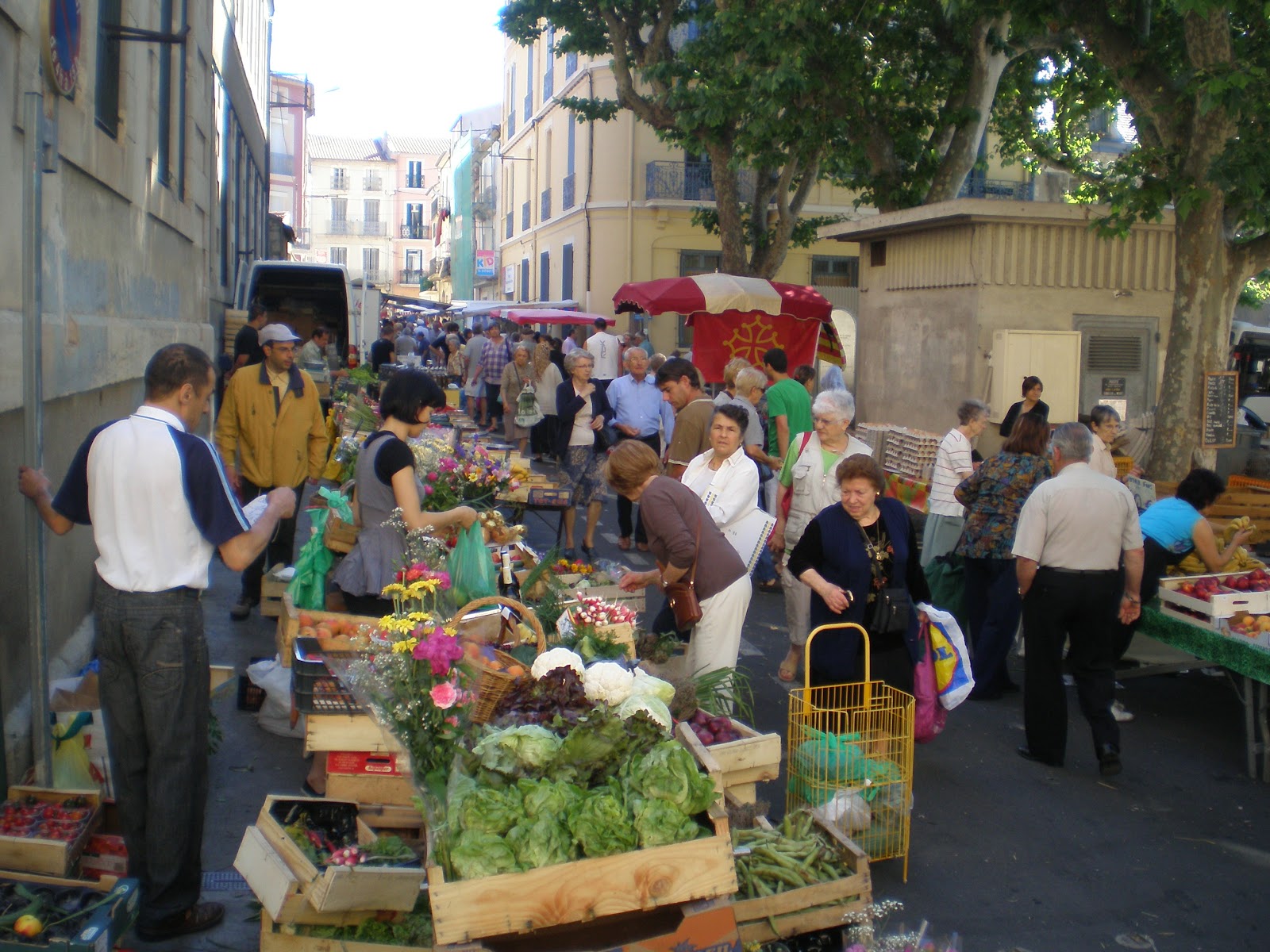
I've enjoyed visiting Provence and the Côte d'Azur; but somehow the Languedoc felt calmer, less populated, and a little less popular. Our time there was relaxing, unhurried. The region is also stunning in its natural beauty. The sea, farmland, vineyards, the mountains. Not far from the Spanish border so influences of Spain are ever present. We visited the medieval walled city of Carcassonne, a place both Robert and I had always wanted to see, the medieval villages of Pézenas and Minerve; we went to the open air markets in Béziers and Narbonne where we shopped for meals with our hostess, Anne de Ravel of Saveur Languedoc.


And we ate. And we cooked. And we drank. And we ate some more. Four incredible nights cooking with Anne at her family's ancestral home near the hilltop village of Montady. We arrived on a Wednesday and Anne had the menu set and the shopping complete for our first meal. She made us, I helped a bit, Tielles, a local delicacy of octopus pie, Gigot (leg of lamb) with Artichoke Sauce, Gratin of Braised Swiss Chard, Anne picked the chard from her garden when we arrived, Salad of Escarole and Garden Lettuce, again picked fresh from Anne's garden, or potager as the household vegetable garden is called in French, ending with les fromages, a local Cantal, a local brebis (sheeps' milk cheese) and a chèvre. Rosé, a popular local spring and summer wine, quenched any thirsts. A wonderful meal for our first night in the Langeuedoc. And it only got better from there.


Anne and I met in New York City in the early 80s when we both took classes at Peter Kump's New York Cooking School. Each cooking station needed two people and Anne and I were paired up. Surprise to me that she was French, and surprise to her that I had lived in France and spoke French. We both took classes to add to our cooking knowledge and skills. We became fast friends, cooked together when we could, and have remained close over the years. It had been quite a long time since she and I had been in a kitchen together, and it was great fun to cook with her again. The meals she planned, the food we cooked, it was all simple, local, fresh, French country food. A menu is often not decided upon until one has been to the market, or the butcher or fishmonger, to see what is good or fresh that day, or checked the potager to see what is ready to pick. This is how we cooked and ate for the four days we were guests at Anne's house. Food heaven!


I often wonder if I make these things up in my head but I swear I tasted the earth in the vegetables that Anne picked fresh from her garden. There's a quality of flavor, and I was reminded of experiencing the same when eating fresh out of my great-grandmother's garden as a child, that one gets from vegetables just picked and served. It's an earthiness, for lack of a better word. As if you can taste the earth itself in the flavors of the item being eaten. There's a complexity to the flavors not apparent in days old, trucked, store bought produce. It was wonderful to taste those flavors again. It was wonderful to cook and eat with Anne again. There is more to come.

This is the first of several posts on our trip to France and Spain. Soon more Languedoc food details with recipes. And more about our time with Anne; followed by food and eating in Barcelona.

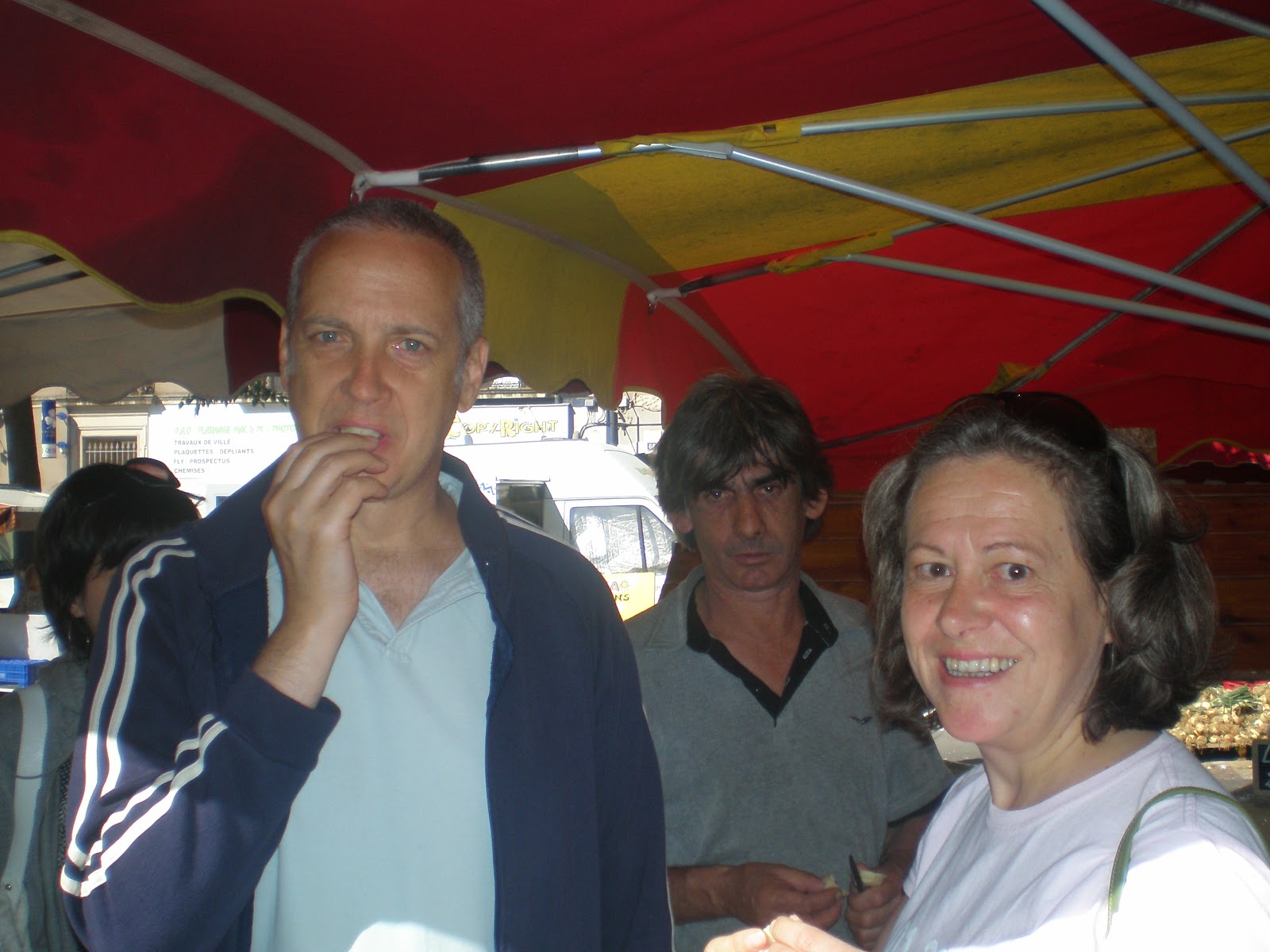
Photos above, taken by Charles Thompson and Robert Guerrero, from top to bottom: the Canal du Midi; Carcassonne; Minerve; the Friday market at Béziers; cheeses for sale at the Béziers market; Anne picking swiss chard from her potager for our first meal; Anne's family home, 'Soustre'; Tielles, octopus tarts for sale at the Béziers market; Beth Higbee, a fellow visitor, and Anne doing prep work in the garden; Charles and Anne tasting raw milk Cantal cheese at the Béziers market.

My Status: home, over jet lag and blogging, cooking, eating, blogging...

Upcoming Posts: France and Spain: more detailed blogs about food and travel adventures in France and Spain. The Wedge Salad: a recipe, the origins of the salad and of Iceberg lettuce. Review: 'The Barcelona Cookbook'.


Bookmark and Share

Wednesday, June 10, 2009

Spain


I hate flying. And I don't particularly relish staying in hotel rooms. Being a tourist is not a favorite pastime either. But I still love to travel. What I really like is being in a place. Letting the effects of a place slowly seep into my awareness, slowly take over my senses. At times one must kick start that process by being a typical tourist, bus tours and all. But that's just a primer to really starting to know a place. Travel is ultimately about discovery. Discovery of a new place, culture, language, food. There's a mysteriousness to uncovering, and exploring a new city, a new country. I don't know Spain the way I do France. Before this recent trip, I'd been to Madrid for a day before flying to the island of Mallorca for a week long wedding. Mallorca was total, complete heaven. I could have stayed and never left. That trip was long ago. Being back in Spain for an extended period of time allowed me to re-discover and discover more of this wonderful country. I'd definitely like to spend more time there.

After my year long stay in France when I was eighteen, I went on a three-month tour of western Europe by train. I saw almost all of the western European countries except for Spain. It was the late 70s and it was still this fairly unknown place with a recent quasi-facist past . And it was far away; stuck down by itself along with Portugal. It just didn't quite fit into the big geographic circle I was making through France, Switzerland, Austria, Italy, Greece, Germany, Denmark, Sweden, Scotland, Ireland and England. And on return trips I never quite made it there either. I didn't know what I was missing.

France, as stated in my last post, is still my home away from home, my self-adoptive country but I do have a new appreciation for Spain and the Spanish. Robert and I found the people to be warm, friendly and open. There was a sort of laissez-faire attitude that was very comfortable to us. Barcelona was a dream place. I had heard that it was. With Gaudi leading the Modernist movement, and building amazing buildings like the Sagrada Familia cathedral, the city couldn't help but be dream-like. The food followed suit. Bold, direct and vibrant. I learned how to eat and order tapas (finally!). The city is dotted with cervecerias on every corner. They're open morning, noon and night. Stop in for a cafe con leche and a montadito of egg and potato for breakfast, go back in the evening for beers, sangria and five or six tapas dishes. I'll be writing more about our food experiences as soon as I am over my jet lag and back on track but some of the delicious things we ate included: tortilla (potato omellete), patatas bravas (fried potatoes in spicy red sauce with garlic mayonnaise), pimientos del padrón (deep fried peppers), montaditos (little sandwiches with all manner of ingredients), oxtail stew, grilled shrimp and much more (to be revealed).

One of our favorite places, a block away from our amazing hotel, was Cervesería Catalana. Always busy with people spilling out on to the street. Traditional tapas; very well prepared. Our first night, and our initiation into ordering tapas, was at Cervecería Ciudad Condal. A big, bustling place with a wait for a table. After we were seated at a corner table in the back of the restaurant, we both looked at our all Spanish menus then at each other: what now? Robert speaks Spanish fluently and I can easliy get by. It wasn't that the menu was in Spanish; it was that we had no idea what the things listed on it were. The very nice waitress (used to clueless tourists) offered to bring us an assortment of dishes. It was perfect. Just enough, not too much. All amazingly delicious. We'd managed to successfully order and eat tapas in Spain. We walked off into the warm night, sated and happy. We were falling for Barcelona fast. By our third and final night it was full on love. I now understood why everybody raved about this city. Our final night in Spain was spent in Madrid, and it was another love fest; a magical city that felt a bit like London due to the cool, damp weather and a bit like Paris in its vast grandness. We both liked it all over again. Spain was quickly becoming a new favorite European country. One we'd both like to explore further.

¡Buen provecho!

Watch this spot for more about our travel and food adventures in Spain (and France).

My Status: Robert and I returned home on Saturday, June 6. I am recovering from jet lag, getting caught up and wishing I was still in France and Spain!

Upcoming Posts: France and Spain: more detailed blogs about food and travel adventures in France and Spain. The Wedge Salad: a recipe, the origins of the salad and of Iceberg lettuce.

Bookmark and Share

Sunday, May 31, 2009

France

My love affair with France began at age sixteen. I was lucky enough to spend an entire week in Paris with my high school French class, thanks to the generosity of my father and step-mother. It was the Spring of 1976 and I fell in love with Paris and the French almost immediately. A lot has changed in Paris since those heady first days. I have returned often but somehow each time is like that very first time. Always exciting, always something new to see and discover. This time was no different. Once Robert and I stepped out of the cab in front of the hotel I felt that wonderful frisson I always feel in Paris. Somehow I feel more alive in Paris. I tell people often that France is my second home. I have traveled a lot, been to many foreign countries, liked most all of them but when I am in France I feel at home. Like I belong. Being back in Paris was like returning chez moi. I now feel so very comfortable there. I know how to communicate, how to order in restaurants, how to travel by métro, how to deal with the quirks of the French and France most Americans are confused by.

Our two days went by quickly and were filled with seeing friends who live in Paris. We ate well but that was not the focus of our time there. Because time was so short and because I was trying to see three French friends and two American friends we didn't have the chance to really focus on food. We did eat as much bread, butter and café crèmes as we could. We did grab wonderful leek quiches and fruit crumbles from the corner patisserie for the TGV ride to the Languedoc. We did walk more than we have walked in a very long while. The city enveloped us, wrapped us up in its magic charm and almost didn't let us go. I found it very hard to leave. But another friend in the Languedoc awaited us so I reluctantly boarded the TGV to Béziers.

The Languedoc was all about food (more extensive blogs coming when I return) due to my French friend Anne de Ravel of Saveur Languedoc. Anne has returned from the U.S. to her family farm near Béziers and now runs a cooking and lifestyle company that concentrates on the food and wine of the Languedoc. Those who wish to can spend five days with Anne learning to cook local food and eating in regional restaurants, touring wineries, and meeting local chefs and food purveyors. Because of her connection to food her home, and our stay, was food-filled. Fresh lettuce and Swiss chard from her garden, local seafood from the open air market in Narbonne, local cheeses, fresh bread bought in Montady, the closest village, each morning. Anne and I cooked together and we all ate like kings. Some of the dishes we prepared were fresh sardines barbecued over grape vine cuttings, or souches, a mixed grill of beef short ribs, fresh sausage, chicken that we picked up in Béziers - a medium-sized town close to Anne - also cooked over les souches; local delicacies like tielles, an octopus tarte. We also ate a lot of fresh vegetables either from Anne's garden or from the farmer's market. That is only some of what we ate.

I am going to stop this short as we have a train to Barcelona to catch but I wanted to get something posted at the mid point in our trip. Unfortunately, I didn't realize that my laptop doesn't accept the media card from my camera before I left so this post is without photos but I have taken hundreds that I'll be posting with new blog posts I add when I get home next week.

A bientôt!

My Status: Robert and I leave for Barcelona this afternoon at 3:45 p.m., and return home on Saturday, June 6.

Upcoming Posts: Spain: if time allows, I'll be posting blogs from Barcelona. The Wedge Salad: a recipe, the origins of the salad and of Iceberg lettuce when I return. As well as several posts about our food experiences in France and Spain.

Bookmark and Share

Thursday, May 21, 2009

Seattle


Seattle is most definitely a food (and coffee!) city. It's also a gateway city: to Alaska, to the Pacific, and Asia further off. Large numbers of people come and go from it. Several flights a day arrive and depart to and from Asia and Alaska; cruise ships embark heading north up along British Columbia through the Inside Passage to Alaska, or out into the Pacific to far off destinations; Canada is just over the border a few hours north. The city is diverse culturally, and cosmopolitan in feel, yet still has a Northwestern charm all its own.

The Emerald City

I spent this past weekend in Seattle attending the International Food Blogger Conference, sponsored by Foodista, a cooking encylopedia everyone can edit -- the Wikipedia of food. The last time I was in, or near, Seattle was when I was about fourteen years old. My mother took my sister and I on a three-month long driving tour around the Northwest. I have dim memories of the city itself but do remember stopping at the beautiful Olympic Rain Forest on our way north. In any case I was anxious to visit this city again. Especially considering that since the early 7os when I was last there it has become a food mecca. I found it to be quite wonderful. It reminded me a lot of San Francisco, the damp weather, the hills, all the water, and the food. When I was in the Capitol Hill and West Seattle neighborhoods, I was reminded of Hillcrest in San Diego. Quiet, friendly neighborhoods, like small towns set amongst a thriving city. Yes, there is quite a lot of rain, wet and cold to reckon with if one lives in Seattle, but the beauty and quiet pace of life seemed like a nice balance. The amazing, sunny, mid-70s weather we had all weekend probably helped weave an emerald spell but even on the one damp day I was still smitten.


Food & Eating

Now let's get to the food. My first night I ate alone at Spring Hill restaurant in West Seattle and I could not have been happier. The kitchen is open and I had a table at the very back facing forward into the dining room with the kitchen to my left. I sat, ate, observed, listened, ate more. I was quite impressed with the way the kitchen and dining room staff operated; with a quiet precision. Very few uneeded movements. Almost like watching restaurant choreography. Not something I experience often. The restaurant is owned by the very capable husband and wife team, Chef Mark Fuller and Marjorie Chang Fuller who handles the front of the house. I spoke to Marjorie and learned that they'd be serving us lunch at the IFBC on Sunday so I got to see them again which was a treat. I ate the Chicken/Shrimp Paté, Green Garlic Mayonnaise, Turnips, Asparagus as a first course, and the Handmade Tagliatelle, Spicy Pork Belly, Hen of the Woods, Grilled Green Garlic, Parmesan as a main and I was, sadly, too full to squeeze in dessert. It was as delicious and as perfectly prepared as it sounds. Both dishes.

Earlier in the day I went to Pike's Place Market -- something I'd wanted to see for quite a long time. It didn't disappoint. A lively, bustling and touristy place but it was all good. It was fun to see the original Starbucks and the not-quite-original Sur La Table store (it had moved from the original market location to where it is now). I had a very good lunch in a French place called Café Campagne. I sat in a window seat looking down the hill over the market to the water below and ate a delicious Burger d'agneau -- Lamb burger with balsamic grilled onions, roasted peppers, aïoli and pommes frites. A perfect late lunch.


Food Bloggers

The IFBC was a lot of fun, I met some amazing people, ate great food prepared by local purveyors and learned a hell of a lot about food blogging. I now have two new Los Angeles-based food blogger freinds, Jo Stougaard of My Last Bite and Afaf Serrato of Simply Heaven. The three of us had such a great time together. We all went to dinner at a great Italian restaurant, Spinasse, in the Capitol Hill neighborhood, on Saturday night after attending a Q&A with Ruth Reichl who is out promoting her new book, "Not Becoming My Mother". It was a hoot to see her, we all got a copy of the book which she signed for us. At Spinasse we shared several dishes two of which were Tajarin al ragu (fine hand cut egg pasta with ragu), and Ravioli di tapinambur al burro e salvia con pignoli (ravioli of Jerusalem artichokes with sage butter and toasted pine nutes). Jo and I had another amazing meal at Le Pichet on Sunday night, a Molly Wizenberg of Orangette fame recommendation. We ate L'Assiette de charcuterie and a salad of greens with confit of duck gizzards, Jo had the Boudin blanc et sa salade tiede aux chou-fleur et pommes de terre (Chicken-pork sausage, roasted, on a warm salad of cauliflower, potato, cornichon and spring onions) and I had Onglet frites (Grilled Oregon Natural beef hangat steak, on escarole, sauteed with olives and garlic, rosemary-red wine sauce). Old-fashioned, wonderful French food. We both were quite happy with our meals.

One of the more interesting IFBC panels took place on Sunday: “Passionate Purveyors & Producers”. One of the passionate purveyors was Carrie Oliver of Oliver Ranch. Carrie and Oliver Ranch promote 'artisan beef', and knowing where your beef comes from. As they say on their website: 'Like fine wines, beef flavor & texture are influenced by breed, growing region, diet & the unique skills of those who raise it'. I'd never actually thought about it like that but it does make sense. I found all she had to say very interesting and wanted to know more. Jo, Afaf, Phil Nigash of My Life As A Foodie and I are hoping to do an artisan beef tasting this fall that Oliver Ranch organizes. It should be a lot of fun as well as informative.

Some of the amazing bloggers I met over the weekend: Chef Reinvented, Fork This, My Last Bite, Not Without Salt, Phoo-D, Plumpest Peach, Recipe Girl, Simply Heaven, The Well Tempered Chocolatier. A long list of local chefs, restauranteurs, and purveyors supplied the conference with wine, cheese, coffee, chocolate, breakfasts, lunches, drinks, snacks, hors d'oeuvres. All locally produced using local products when possible. We ate very well. There seems to be a nice community of food people who seem to support one another in Seattle.

There's so much more to tell and write about but this is long enough so I'll end it here leaving you with a little hodge-podge of things that happened during my frield trip to the Northwest. It was an amazing weekend and I am now a huge fan of Seattle, and all the food people who live and cook there.

My Status: Robert and I leave for Paris, the Languedoc, Barcelona and Madrid on Sunday, May 24, returning home on Saturday, June 6.

Upcoming Posts: France and Spain: if all goes well technologically, and time allows, I'll be posting blogs from Europe. The Wedge Salad: a recipe, the origins of the salad and of Iceberg lettuce when I return.

Bookmark and Share

Friday, April 24, 2009

The Local Report - Canelé

3-26-09 002

.7 miles, about 3 minutes, from my home in Atwater Village.

A canalé is a specialty of the Bordeaux region of France. A small pastry with a soft custard center and a dark caramelized crust. They are eaten for breakfast, as a snack, and for dessert. Canalé is also a favorite neighborhood restaurant. Just a few walkable blocks from home. Robert and I were there on a recent Friday night. We have often wondered how the recession is affecting restaurants. It didn’t seem to be having much of an affect on Canalé this particular night. The restaurant was full and people were still waiting for tables when we left around 9:15 or so.

It’s great to see this place doing so well. The food has been called French-California-Mediterranean. And it is, but some of the menu items are classic French. Those are the ones I like the most. Like the bouef Bourguignon with buttered noodles I had on my first visit, and the pissaladiere with herb salad. They also have sides like pommes Anna, a very old-fashioned potato dish of layered potatoes and butter; starters like leeks vinaigrette, and brandade, a salt cod dish originating in the Languedoc and Provence regions of France. On our most recent visit we both had the bistro steak with sauce bordelaise, pommes Anna, and creamed spinach. Prepared perfectly. We were quite content at the end of the meal. They also offer a starter of Spanish ham, an Italian pasta dish in honor of the restaurant that was in the space for many years: Osteria Nonni, and a simple roast chicken. All less than classic French but equally good. Both the chef-owner, Corina Weibel, and general manager-owner, Jane Choi, come from other celebrated American restaurants: Campanile, and Lucques for Corina, and Pastis and Balthazar in New York for Jane.

The place has the feel of a Parisian bistro. Once inside it’s easy to pretend you are at a back250px-Caneles_stemilion street bistro in Paris. One Parisians living in the outer arrondissements might go to. The kitchen is open and practically in the narrow dining room which is part of the fun. There are a few seats at a counter looking into the kitchen, and a communal table in the front window. The staff is welcoming, attentive and congenial. We were seated near the front door so we watched as people arrived. It was obvious that a lot of the clientele comes from the neighborhood, and that many are regulars. The hostess knew a lot of the people coming through the door. That is what, after several visits now, I like most about the place. It’s unstuffy neighborhood vibe. It’s honest cooking. It’s not fancy nor does it need to be. And to top the meal off they offer you a warm canalé as you are going out the door.

http://www.canele-la.com/
  • Canelé
  • 3291 Glendale Blvd.
  • Los Angeles, CA 90039
  • 323-666-7133
Bookmark and Share

Wednesday, March 25, 2009

Chef Wally’s Baked Papaya

October 10, 2010 ~ If you are here because of the 'Foodista Best of Food Blogs Cookbook: 100 Great Recipes, Photographs, and Voices' this blog, 100 Miles, has moved to a new URL: http://www.100miles.com. If you would please click the link below it will take you to the blog post 'Chef Wally's Baked Papaya' (where you may also print out the recipe) at its new location:

http://tinyurl.com/248bpj4

Thank you,

Charles G Thompson

100 Miles

One of my earliest memories of a great dish -- when I first understood that food could be amazing -- took place when I was 10 years old. My mother, sister and I lived on the Central Coast of California near Hearst Castle in San Simeon. We Baked Papaya 019 lived in a trailer park across Highway 1 from the Pacific Ocean about fifteen minutes south of the castle and about twenty minutes north of Cambria. The entire area is stunningly beautiful. We spent many afternoons walking the rocky usually chilly beach five minutes from home picking up shells and rocks, and collecting driftwood.

As I remember the day, after one of our afternoon walks, we returned home and upon opening the door the most wonderful, amazing smell wafted over us. I was instantly intrigued as it smelled delicious. Like nothing I had smelled before. I went to the kitchen and looked in the oven, and inside were six papaya halves baking away. But there was no one in the trailer. Who had made this amazing dish?

It turns out that, Wally, a family friend had come down from Carmel and while we were out made one of his signature dishes: Baked Papaya. The smells of the cooking process had permeated the small trailer. He had stepped out to get something. For a 10-year old it was all very magical and mysterious and who knows how much the interceding years have affected those memories. It is still one of my earliest and strongest food memories. When Chef Wally returned we all sat down and ate the baked papayas and they were as delicious as they smelled. I asked Wally to send the recipe and he did. I have made it many times over the years.

The funny part to this story is that when I recently asked my mother about it she had to correct a few things. I thought Wally really was a chef at a restaurant in Carmel – all these years I thought that. He had signed the hand written recipe ‘Chef Wally'. Well, as my mother patiently explained, Wally was not a chef but a traveling auto parts salesman -- albeit one who liked to cook and was quite good in the kitchen. So my memory of this great chef giving me one of his coveted recipes was dashed. No matter it’s still a recipe that I cherish, and make, to this day.

This dish can be eaten alone, or can be served with pork or fish dishes -- like pork chops, roast pork, or a sturdy fish like Mahi Mahi, or red snapper, etc. A full-bodied white wine like a Chardonnay is a good wine to accompany it.

CHEF WALLY’S BAKED PAPAYA

Ingredients

2 papayas; if green when purchased allow to ripen 1-2 days to a green-yellow color. Soft to the touch.

1/4 cup fine bread stuffing

1/4 cup Parmesan cheese – I used Parmigiano Reggiano

1 cup onion, finely diced

1 tomato, skinned & chopped

2 tbsps. butter

Salt & pepper

Preheat the oven to 400 degrees.

Mix the stuffing and parmesan cheese together in a bowl and set aside. Cut papayas in half length-wise, remove and throw away black seeds. Dig the meat out of each half with a spoon leaving the remaining shell intact for refilling later, chop the meat coarsely then set aside. Skin and chop the tomato and set aside. Finely dice the onion.

Heat the butter in a skillet until it bubbles then add the onions and cook until clear not brown. Add the papaya meat. Add the tomato. Stir the whole mixture together. Season with salt and pepper. Cook over medium heat, stirring gently from time to time. When mixture is thick, after several minutes, turn off the fire.

Place the papaya shells in a casserole dish in a half-inch of water so they won’t burn. Spoon the cooked mixture into the shells evenly. Top each off with the bread crumb-parmesan mixture. Dot each with butter.

Bake in the oven for 30 minutes or until the tops are brown.

Bon appétit.


Bookmark and Share
Reblog this post [with Zemanta]

Saturday, February 21, 2009

La belle France OR 100 Kms. - Part 3

I also learned to enjoy the regional dishes of Alsace. Colmar sits a half-hour away from the German border and the Black Forest. Much of Alsace’s cuisine is influenced by its proximity to, and history with, Germany. That combined with the cold, wet weather of northern Europe lends a certain heartiness to its dishes. Alsace is known for such dishes as choucroute garni, an Alsatian version of the German sauerkraut, baeckeoffe, a baked dish of pork, beef, mutton, potatoes and white wine, tarte aux oignons, onion tart – a dish I liked to eat often, spätzele, the German influenced small dumplings served with meat dishes, and for dessert kougelhopf, a coffee cake, and tarte aux quetsches, or plum tart.

Aside from the everyday shopping, I also helped Madame Zundel in the kitchen to prepare the lunch meal. For the evening meal I was solely responsible and I usually made a simple soup like leek and potato, a salad, cheese and bread. As it turned out Madame Zundel was American; she came from Northern California so when I first arrived to the household we spoke a lot of English until she insisted we speak French only. She also had cookbooks in English – one of those being Julia Child’s Mastering the Art of French Cooking. That book quickly became my bible. I used it often throughout the year, and from it I learned the basics of French cooking. By the time I returned to the states I was well grounded in French cooking techniques. Madame Zundel and I made many wonderful dishes together. If she had guests over she always let me help with the menu and meal preparation as well as sit at table with the other guests. For Christmas she and her husband gave me Raymond Oliver’s La Cuisine – sa techniques – ses secrets. In French, recipes in grams and liters, and a cookbook I still use today.

My experiences in France that year started me on a lifelong journey involving food and eating. The simplicity of the way of life; the daily revolution around meals and sustenance; the quality of the ingredients that were the rule not the exception all showed me the value of living in a forthright yet uncomplicated way. A way that feeds not only the body but the soul.

Here is a very easy but fun recipe for yogurt cake that Madame Zundel and I made often. The measurements are based on 1 small yogurt container. We usually served it without frosting but with melted chocolate and ice cream. The children loved it.

MADAME ZUNDEL’S YOGURT CAKE

1 container of plain yogurt
3 containers of flour
1 container of vegetable oil or melted butter
2 containers of sugar
2 eggs
1 tsp. of baking soda

*container(s) refer to the yogurt container. Once the yogurt is poured out, rinse the container out, and use it as a measure for the other wet and dry ingredients

Mix all the ingredients together well then pour into a floured cake pan and bake at 375 degrees for 45 minutes.

Bon appėtit!

Photo Credit: Alec Sharpe


Bookmark and Share

La belle France OR 100 Kms. - Part 2

Another delight was the bread. I made a daily stop at the bakers’ to buy bread -- bread baked that morning. With seven mouths to feed the bread went fast. We usually had several different loaves to choose from at table: baguettes, whole wheat, and farmhouse, among others. It was a wonderful treat to have bread that fresh and to slather it with sweet Normandy butter. Breakfasts were comprised of coffee or tea and bread. A honey local to Alsace, miel de sapin, or ‘pine tree honey’ was usually on the table with other jams and jellies. Miel de sapin is made from bees gathering pollen from pine trees that forest the local Vosges Mountains. Unlike most honey, it has a slight resinous taste; considered an acquired taste but one I learned to love. It was like no other honey I had ever eaten. Often on the weekend, Monsieur Zundel would jump into the car and drive to the local patisserie and bring back fresh-baked croissants.

The cheese course, after the salad course but before the dessert course, quickly became one I looked forward to. One cheese I grew to love was müntser, a locally made cheese from the Münster Valley, located about 25 kilometers from Colmar. Münster, a soft-ripening cheese with an orange rind and a nicely pungent flavor, was eaten with caraway seeds. Sprinkle a few caraway seeds onto a plate and dip a piece of cheese into them. The combination was delicious – the earthiness of the cheese with the pungent crunch of the seeds.

Photo Credit: Alec Sharpe


Bookmark and Share

Tuesday, February 17, 2009

La belle France OR 100 Kms.

In September of 1977, at age seventeen, three months after I graduated from high school, I went to live in la belle France. And that’s when my real introduction to, and ultimate love for food and cooking, began. After a few days in Paris where I turned eighteen, I landed in the town of Colmar in the Alsace region of eastern France. I lived there for the next year caring for four French children, avec la famille Zundel. I was an au pair or ‘mother’s helper’. My duties included looking after the children, as well as cooking and cleaning. In return I was provided with room and board, and a small cash stipend.

Au pair work was usually given to girls not boys; a fact proven by the work papers (carte de séjour) the local police department gave me. My job title on the permit read ‘jeune fille au pair’ which translates to ‘girl mother’s helper’. Luckily for me the family had four very active children and decided that a boy might be a good idea.

My immersion into the French way of life was immediate. Part of my duties involved daily food shopping. Each morning after dropping the children off at school, I’d consult with Madame Zundel about that day’s lunch menu (the big meal of day) then set off with a list and a large wicker basket. I went to the green grocer, the baker, the butcher, the cheese shop, and occasionally the pastry shop if guests were coming. The shops were all separate from one another and spread around the town of Colmar. I went from one to the next to the next – my basket growing heavier with each stop. My French was remedial at that point but I was able to communicate what it was I wanted by gesturing and pointing.

Each shop, and its attendant proprietors, was a unique experience. Most were family owned businesses handed down through the generations. This usually meant the people behind the counters were the owners or the sons or daughters of. A lesson I learned on day one: always say hello upon entering a French shop or business. As I opened the door, no matter how many people were in line in front of me, whoever was behind the counter always called out ‘Bonjour, monsieur’ – if I did not respond in kind I was met with a stony silence and helped begrudgingly.

My first impression of this new way of life and eating was how fresh and seasonal everything was. This was most noticeable at the green grocer. I arrived in France in the fall so there was an abundance of fall produce. Considering that the vendange, or annual grape harvest, takes place in September there were table grapes available until the end of October. Alsace is known for its white wines, Riesling, Muscat, and Gewürztraminer, so we ate a lot of white grapes always at the end of the meal right after the cheese course in place of dessert. I also discovered, long before this type of green was available in the U.S., something called mâche, or ‘lambs’ lettuce’. Hearty, a bit peppery and a huge improvement on the Iceberg lettuce I grew up with. Most French meals include a simple salad served before the cheese course, and mâche quickly became a favorite. In the spring white asparagus season started – another favorite dish we ate was white asparagus with la sauce hollandaise. White asparagus was grown locally so there were month long festivals celebrating the vegetable and its’ dishes; all the produce stands in the region had piles of it front and center throughout the season. There were many meals of steamed white asparagus with Hollandaise sauce only. Madame Zundel made a variation on the dish by wrapping the asparagus in slices of ham. Some crusty bread, a glass of Riesling, and volia, a meal.

I can’t attest to the fact that all of the produce we ate came from the region; in fact I know that we bought citrus that was from Spain and Morocco. What I do know is that it all tasted amazing -- fresh and full of flavor. I ate blood oranges for the first time, a revelation in taste and color: so juicy with a bright red-orange pulp. The other citrus we ate was always ripe and flavorful. And if memory serves the tomatoes we ate also came from Spain and North Africa – but given the distance they were still bursting with flavor. All of this reminded me of the fruits and vegetables my great-grandmother grew in her garden; and it was vastly better than the produce available at the time in the local Safeway back home.

Bookmark and Share